
Film laminating machines built
for offset and digital printers.
Two complete product lines covering water-based, thermal, and pre-glue coated film lamination — from entry-level converters to premium printers running BOPP, OPP-Matte, MPET, and PVC films at production speeds up to 80 m/min.
Two film laminating machine lines, one technology family.
The E series targets growing converters who need reliable mid-range performance. The L series — our Leader line — is engineered for premium printers demanding the highest end of post-press lamination quality.
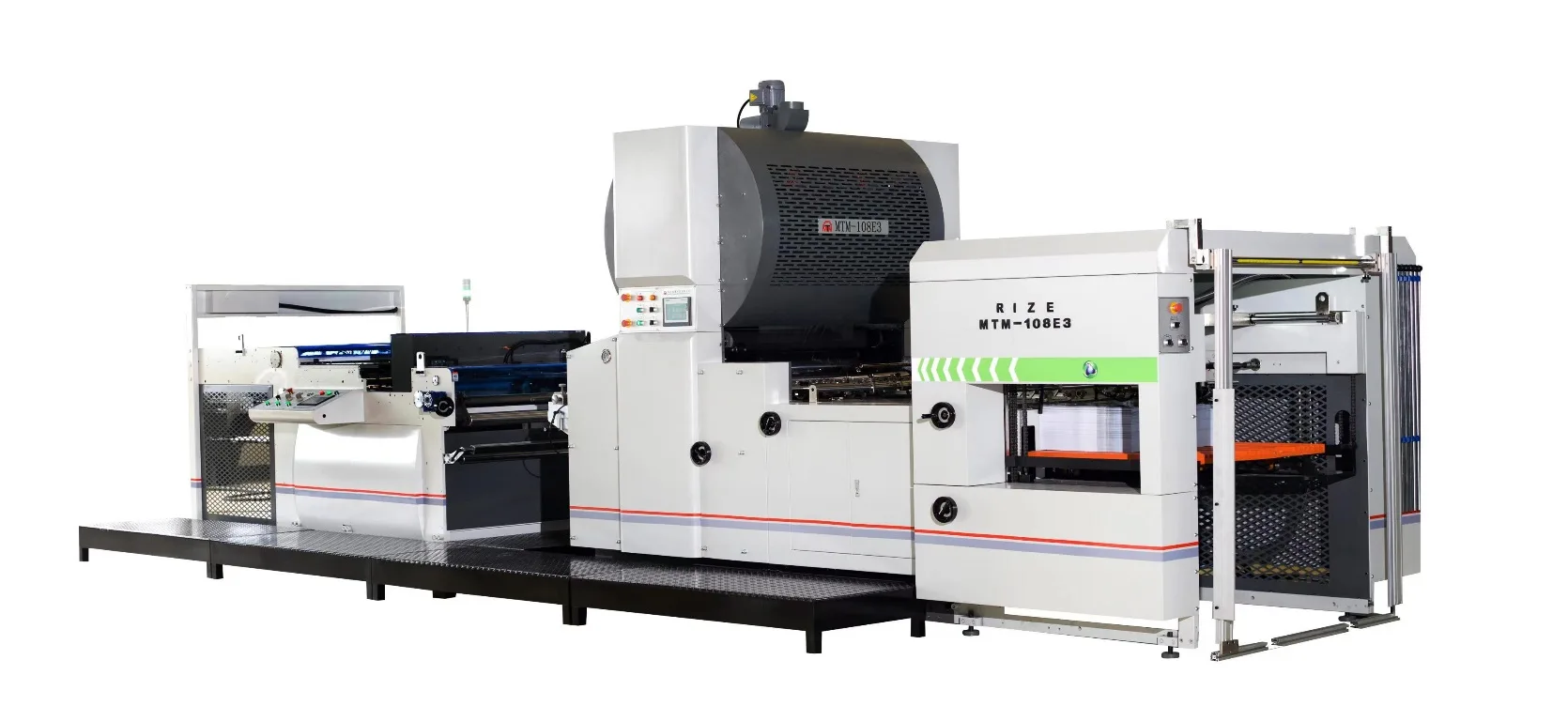
MTM-E — Multi-Functional High-Speed Series
Five proven configurations spanning 1080 mm and 1300 mm working widths. Servo-controlled feeding, electromagnetic thermal drying, and chain-knife or hot-knife cutting options.
- Working width 1080–1300 mm, sheet length up to 1650 mm
- Max speed 80 m/min on calibrated stock
- Paper 150–500 gsm, film 10–25 μm
- Chain knife (standard) · Disc knife (E3) · Hot knife (E4) options
- Siemens PLC + HMI · Schneider switchgear · Becker vacuum
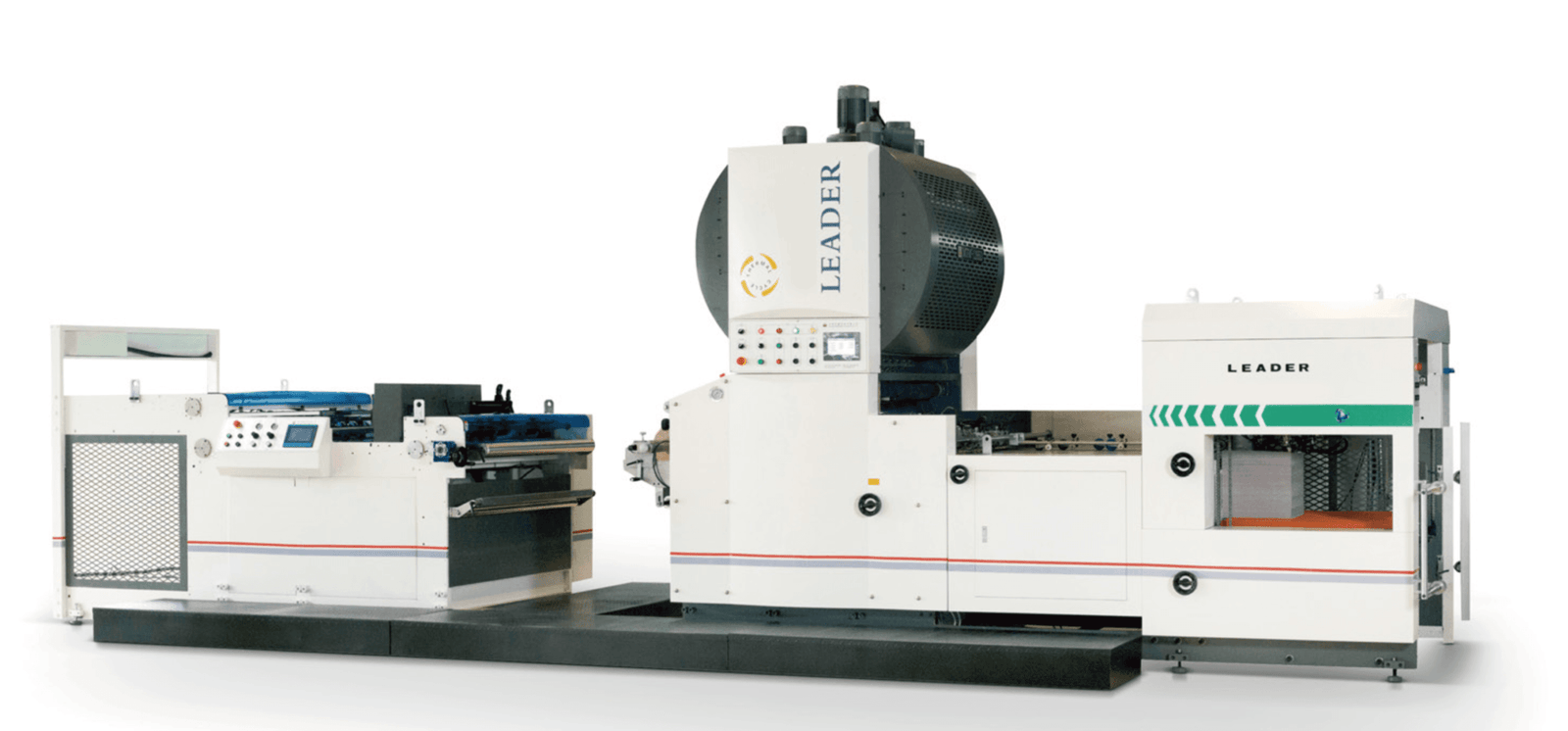
MTM-L — Leader Premium Series
Our flagship film laminating machine line, built for printers serving luxury cosmetics, premium publications, and high-end commercial print. Available with optional Steinemann (Switzerland) hot-knife separation.
- Working width 1080–1300 mm, sheet length up to 1650 mm
- Premium feeder geometry for sheet sizes down to 350×350 mm
- Paper 100–500 gsm, film 6–25 μm
- Optional Steinemann Achilles Gruppe hot-knife technology
- Engineered around the Steinemann lamination tradition
Match the laminator to your offset press.
Three working-width tiers cover the most common offset and digital print formats. Use this to shortlist a film laminating machine, then talk to our engineers for exact configuration matching your job mix.
For B2 & half-format presses
Sheet sizes up to 1080×1080 mm or 1080×1450 mm. Pairs with Heidelberg CD/SM 102, Komori L40, RMGT 9 and similar half-format offset presses.
For B1 & full-format presses
Sheet sizes up to 1300×1450 mm or 1300×1650 mm. The standard configuration for converters running Heidelberg CD/XL 105, KBA Rapida 106, Komori Lithrone GX40 and similar full-format presses.
Chain · Disc · Hot knife
Chain knife is standard for OPP/PET/Metalized films. Hot knife (Steinemann technology, E4 or L-series) is recommended for high-volume metalized PET, PVC, and BOPP at premium print quality. Disc knife is the E3 mid-tier option.
Where film lamination delivers value.
Three end-markets where a SAGLIN film laminating machine pays back the investment fastest. If you are still deciding between processes rather than models, start with film lamination vs flute lamination vs litho lamination.
Luxury Folding Cartons
Soft-touch BOPP matte and gloss BOPP lamination on offset-printed cosmetics cartons. Required for high-perceived-value packaging in skincare, perfume, and premium beauty products.
Book Covers & Hardback Wraps
Thermal lamination on hardcover book wraps, soft-touch matte on premium magazines, and pre-glue coated film for shorter educational and trade book runs.
Brochures, Folders & Menus
Water-based gloss BOPP for corporate brochures, presentation folders, and restaurant menus. The dominant application for the MTM-E series in growing print houses.
Series, format & film questions.
MTM-E or MTM-L — which film laminating machine series do I need?
Which working width should I order for my offset press?
Chain knife, disc knife or hot knife — which separation should I specify?
Which films and paper weights do these machines handle?
Is film lamination the same as flute or cardboard lamination?
Lead time, certification and delivery to Russia?
Not sure which series fits your shop?
Tell us your sheet size, monthly volume, and current offset configuration. We respond within 24 hours with a film laminating machine recommendation, ROI estimate, and detailed quotation.
SAGLIN Machinery
Product Solution Manager, Packaging & Post-Press: Michelle Zhang
Email: michellezhang@sanlinmach.com
WhatsApp / WeChat: +86 153-5621-5089
Response time: within 24 hours
HD RUS LLC — Strategic Partner
Panfilova str. 19, bld. 1
Khimki, 141407 Moscow region
Product Manager, Packaging Print Postpress
Roman Frolov · +7 916 805 6265