
Flute Laminating Machine: Buyer’s Guide for Corrugated
A flute laminating machine bonds a printed litho sheet onto corrugated board, turning plain brown fluting into a high-graphics box in a single pass. If you produce e-commerce packaging, retail-ready cartons, POS displays or premium shipper boxes, a flute laminator machine is usually what decides both your print quality and your daily output.
This guide explains how flute lamination works, the difference between semi-automatic and automatic laminators, what actually matters when you compare models, and what drives the price. It is written for box plants and trade finishers evaluating their first machine or replacing an older line.
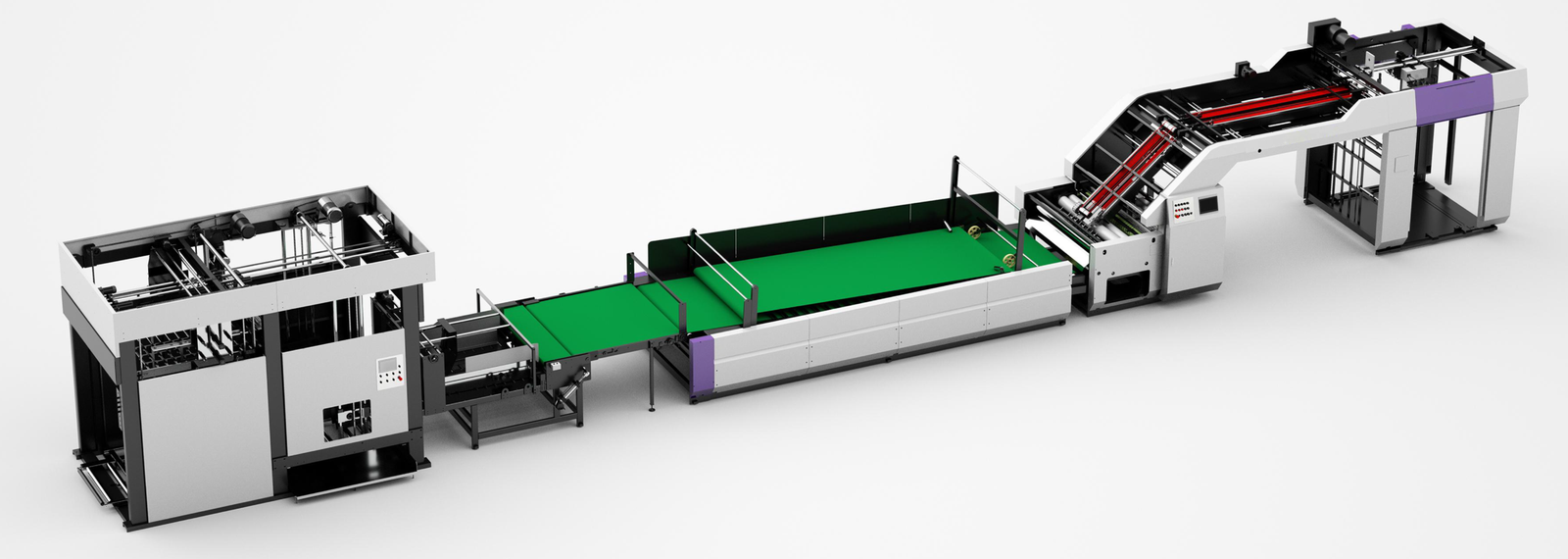
What is a flute laminating machine?
A flute laminating machine (also called a flute laminator or litho laminator) glues a pre-printed top sheet, typically offset-printed coated paper or duplex board, onto single-face corrugated board (E, F, B or C flute) or onto another board layer. The result is litho-laminated corrugated: the strength of fluting with the print quality of offset.
Typical outputs include:
- E-commerce and shipper boxes with branded exterior print
- Retail and shelf-ready packaging where graphics sell the product
- POS displays and floor stands built from laminated heavy board
- Rigid-style gift and electronics boxes using 2-ply or 3-ply laminated board
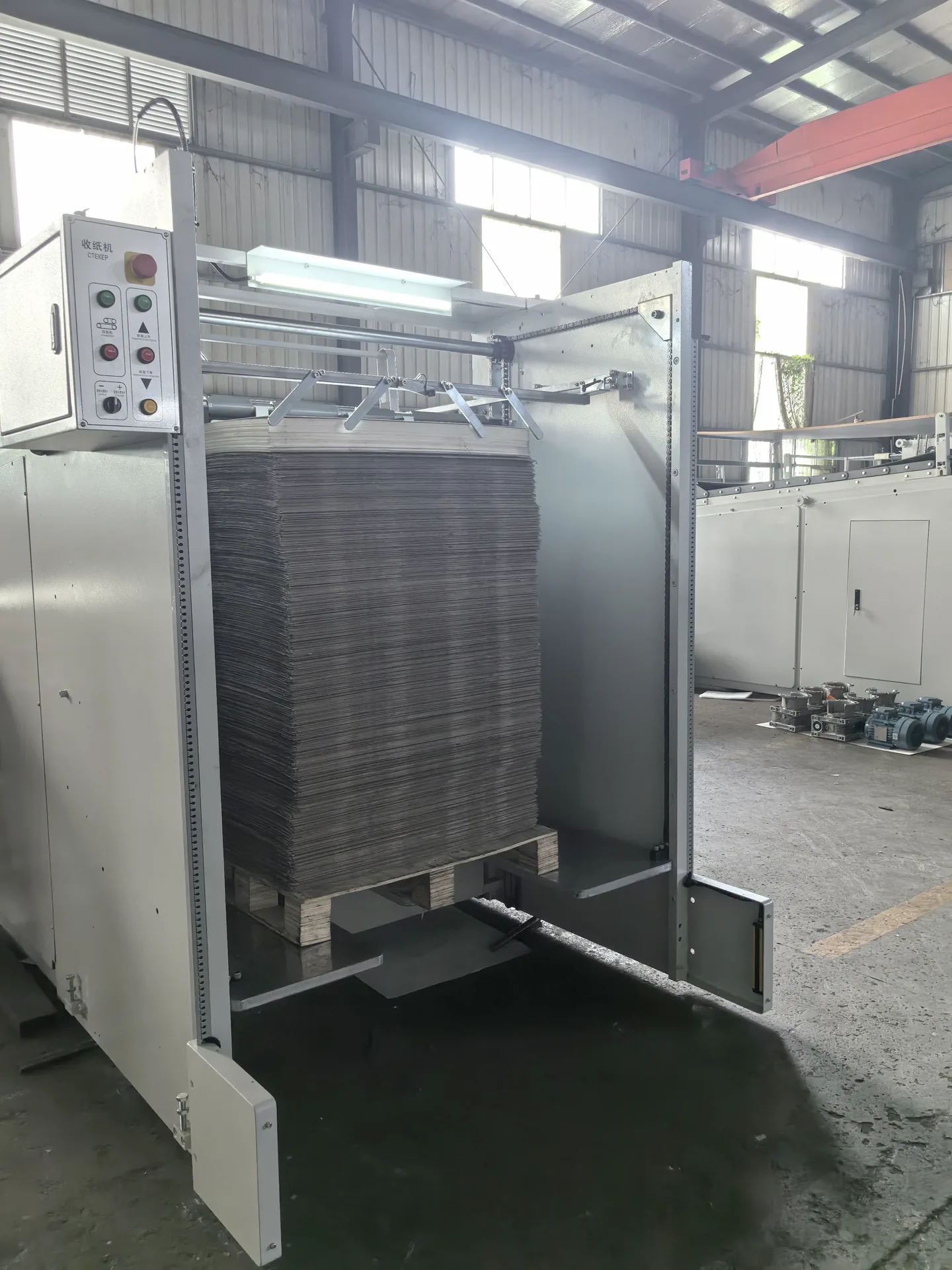
Do not confuse a flute laminator with a film laminating machine, which applies a thin plastic film (BOPP, matte, soft-touch) to a printed sheet for surface protection. A flute laminator bonds sheet to board; a film laminator bonds film to sheet. Many converters run both, in that order: film-laminate the printed sheet first, then flute-laminate it onto corrugated.
How does flute lamination work?
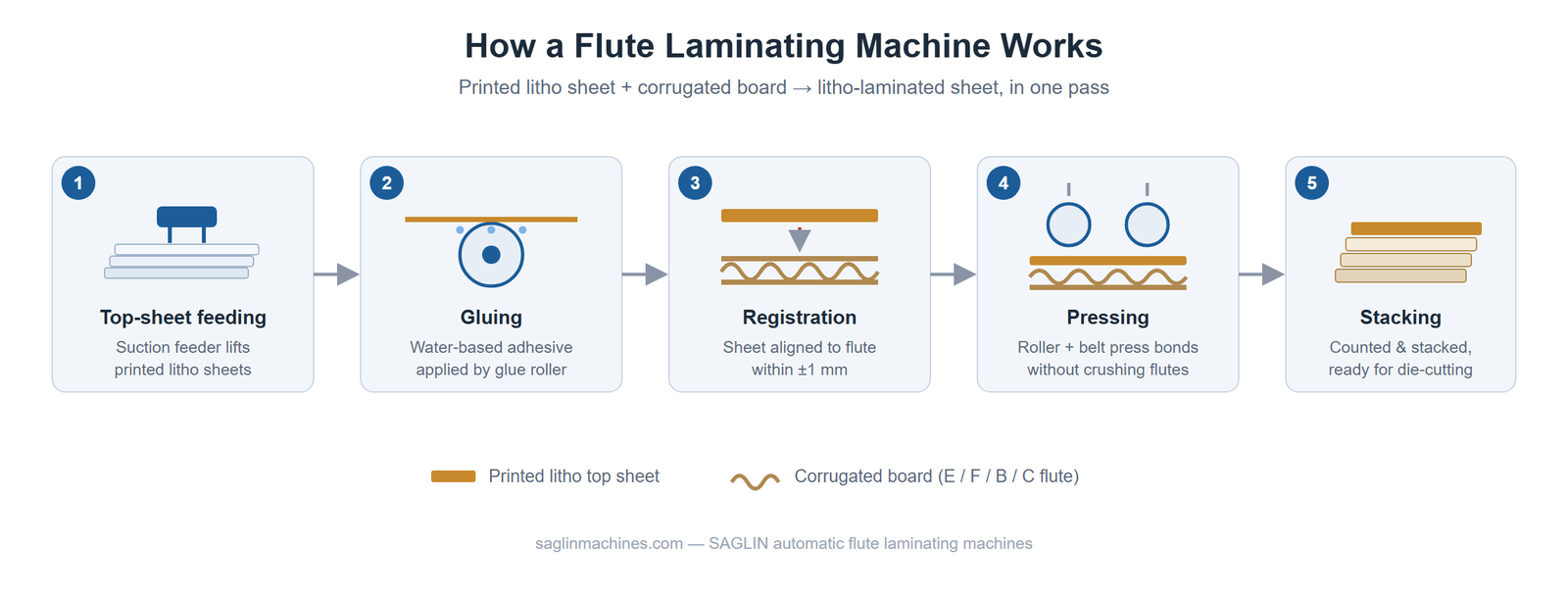
A modern automatic laminator runs five stages in one continuous line:
- Top-sheet feeding. A high-pile suction feeder lifts printed litho sheets one by one and drives them to the registration section.
- Gluing. The top sheet passes over a glue roller that applies a controlled film of water-based adhesive to its underside. Glue-film thickness is adjustable to suit paper weight and flute profile.
- Bottom-sheet feeding and registration. Corrugated or board sheets feed from a separate hopper and are aligned with the glued top sheet. On a good machine, litho-to-flute registration holds within ±1 mm at full speed. Cardboard-to-cardboard models hold tighter, within ±0.5 mm.
- Pressing. The married sheets pass through a pressing section (pressure rollers followed by a weighted or pneumatic press belt) so the adhesive bonds evenly without crushing the flutes.
- Stacking and delivery. Finished sheets are counted and stacked, ready for die-cutting.
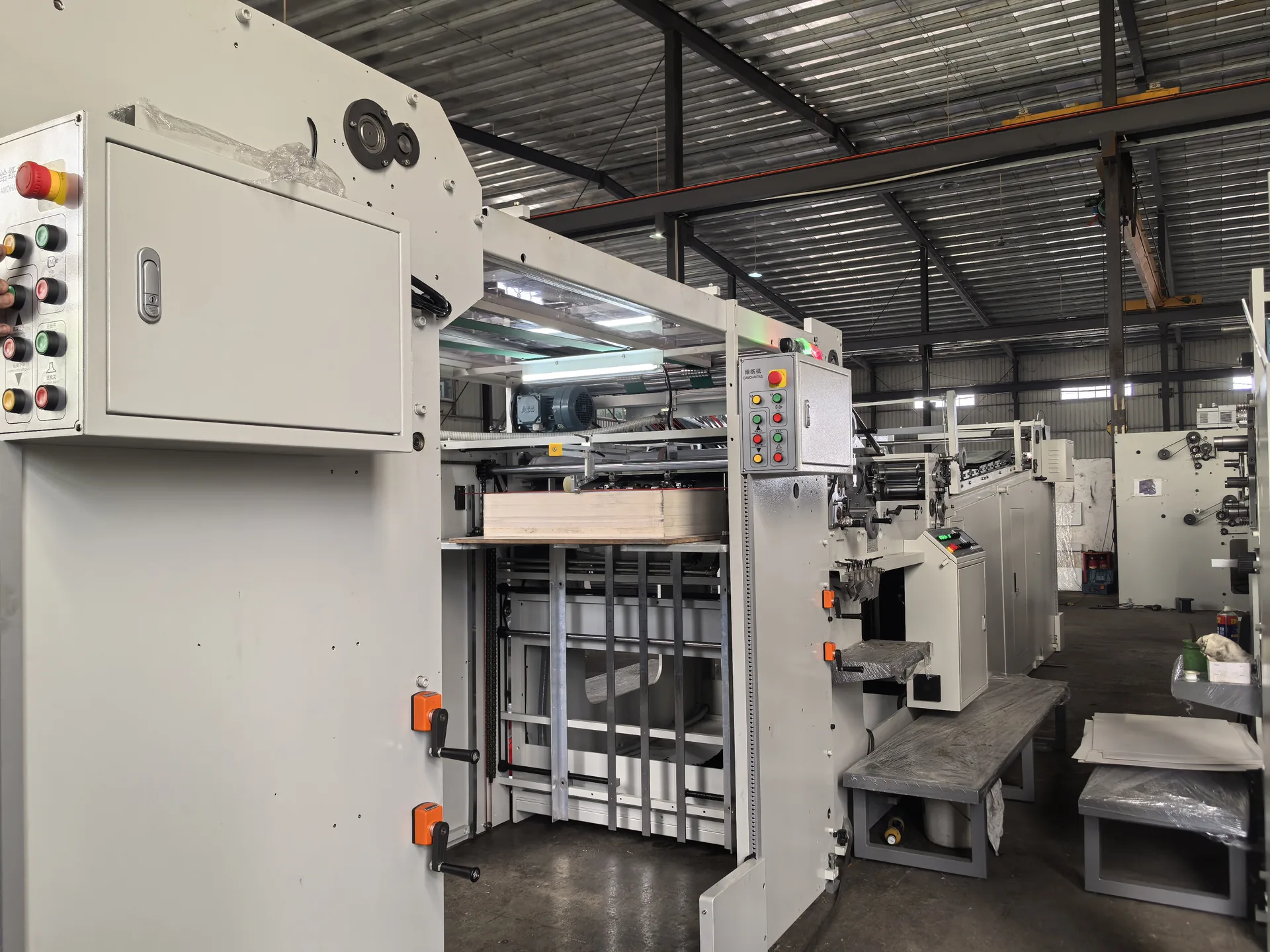
Because the adhesive is water-based, laminated sheets can typically be die-cut after a short curing time, keeping the lamination step from becoming a bottleneck in the workflow.
Flute laminator machine, litho laminator or cardboard laminator: what’s the difference?
The first two names describe the same machine; only the cardboard laminator is genuinely different, because it bonds to flat board instead of to fluting. Suppliers mix the terms freely, which confuses most first-time buyers:
- Flute laminating machine. Laminates a printed sheet onto corrugated (fluted) board. The most common configuration in packaging plants, and often sold as a flute laminator machine.
- Litho laminator. The North American term for the same machine, emphasising the litho-printed top sheet.
- Cardboard (board-to-board) laminating machine. Laminates paper or board onto flat greyboard or duplex, used for rigid boxes and book covers. Runs tighter registration and often higher sheet rates on smaller formats.
- Multi-ply (3-ply / 5-ply) laminator. Builds up laminated board from several layers in one pass for heavy-duty transit packaging.
Most manufacturers, SAGLIN included, build all of these on a shared platform, so the buying criteria below apply across the range. Where film lamination fits alongside these two, and why the accuracy figures quoted for the three machines cannot be compared directly, is set out in our guide to film lamination vs flute lamination vs litho lamination.
Semi-automatic vs. automatic flute laminating machine
Semi-automatic flute laminators use an automatic top-sheet feeder but manual bottom-sheet feeding. They cost less and suit short runs and mixed work, but real-world output depends on the operator and rarely exceeds 3,000–4,000 sheets/hour sustained.
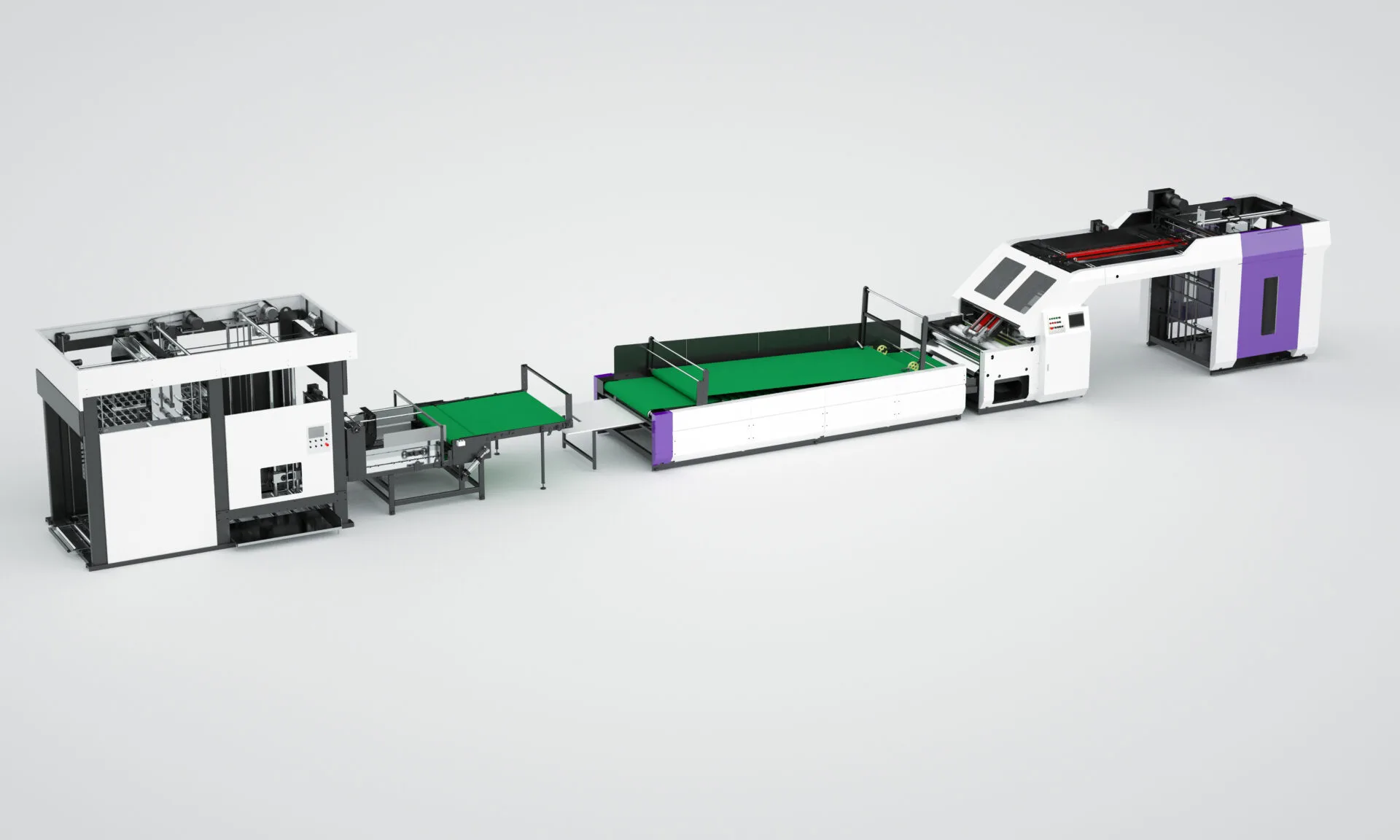
Fully automatic machines feed both webs automatically, register them mechanically or by servo, and stack automatically. Line speeds reach 30–170 m/min. On a machine like the SAGLIN-DX-1450 that translates to up to 12,000 sheets/hour with one operator plus a helper. For any plant laminating more than a few thousand sheets per shift, the automatic machine pays back quickly in labour and waste alone. The seven decision points that separate the two, taken station by station, are worked through in our guide to choosing an automatic flute laminator over a semi-automatic.
How to choose a flute laminating machine: key criteria
Ten specifications decide whether a machine fits your plant, and price is only one of them. Use this checklist when you compare quotations:
| Criterion | What to check | Why it matters |
|---|---|---|
| Maximum sheet size | e.g. 1180×1180 up to 2100×2100 mm | Must cover your largest die-cut layout, not just your average job |
| Minimum sheet size | Smallest top/bottom sheet the feeders handle | Small-format work (cosmetics, electronics) fails on oversized machines |
| Speed | Rated m/min and realistic sheets/hour | Rated speed assumes ideal stock; ask for output on your board grades |
| Registration accuracy | ±1 mm (flute) / ±0.5 mm (board-to-board) | Poor registration scraps printed sheets, the most expensive component |
| Substrate range | Top sheet gsm range; E/F/B/C flute; 2-ply–5-ply | Determines which jobs you can quote for |
| Glue system | Adjustable glue film, easy wash-up, glue recycling | Glue consumption is the main running cost after labour |
| Feeder type | High-pile lift feeder, non-stop capability | Feeding is where most speed and waste is won or lost |
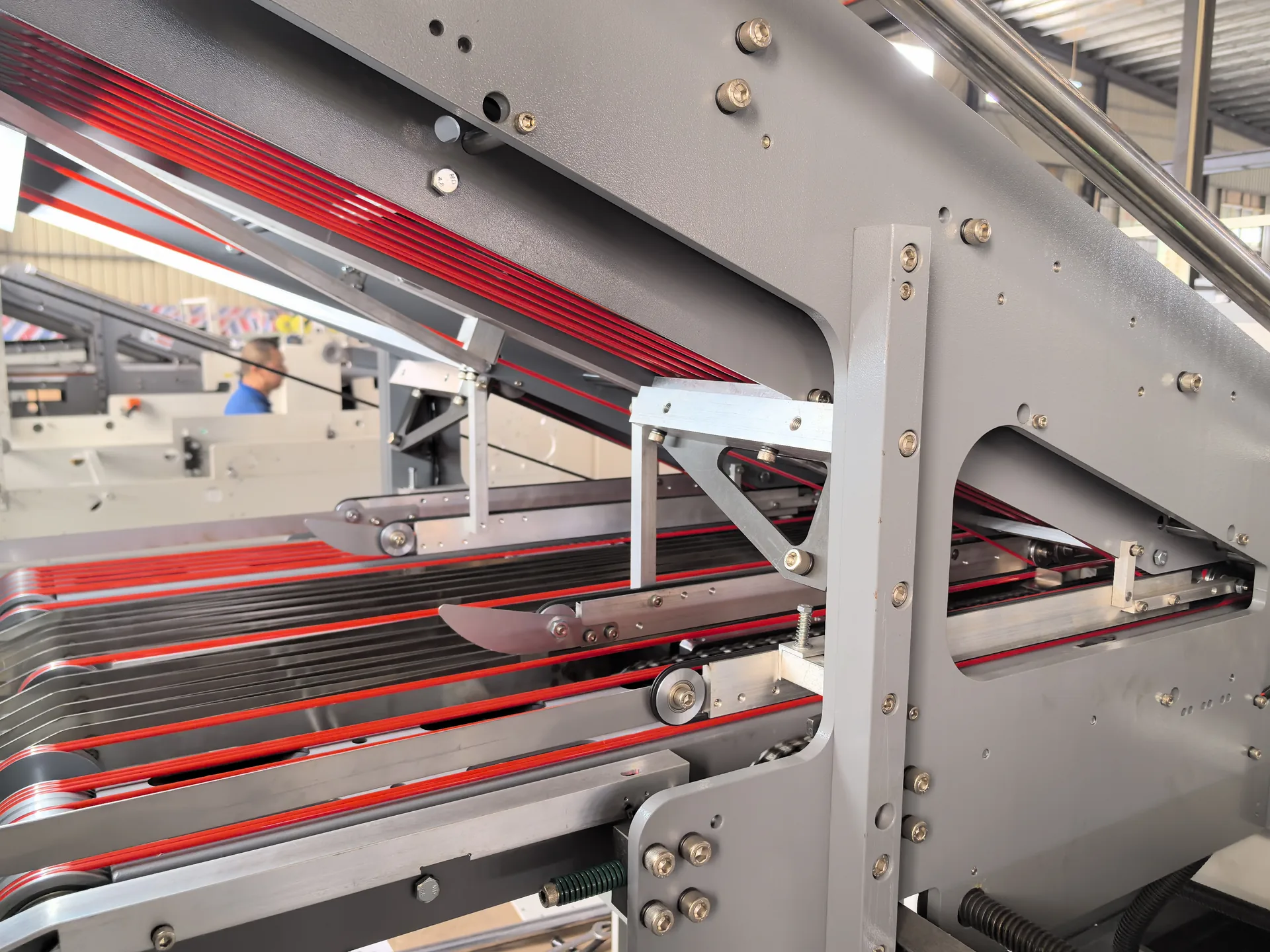
| Pressing section | Roller + belt press, adjustable pressure | Prevents flute crush and washboarding on light flutes |
| Changeover time | Time to switch sheet size / board grade | Critical for short-run, mixed-order plants |
| Service & spares | Installation, training, spare-parts lead time | An idle laminator stops your die-cutter too |
What affects the price of a flute laminating machine?
Five variables account for almost the entire spread between two quotations:
- Format size. Price scales steeply with width: a 2100 mm machine is a different investment class from a 1180 mm machine.
- Automation level. Fully automatic feeding, non-stop feeders and automatic stacking each add cost but multiply output.
- Registration system. Servo-driven registration costs more than mechanical and holds accuracy at higher speeds.
- Ply capability. 3-ply and 5-ply machines carry additional feeding and gluing stations.
- Options. Sheet-cleaning units, glue-viscosity control, high-pile delivery, remote diagnostics.
As a broad orientation, the spread across the market is roughly seventy to one, from a basic semi-automatic machine to a flagship wide-format full-servo line. The right comparison is not price but cost per thousand laminated sheets across the machine’s life, where speed, waste rate and uptime dominate. Public price bands by automation class are collected in our flute laminating machine price guide.
SAGLIN flute laminating machines
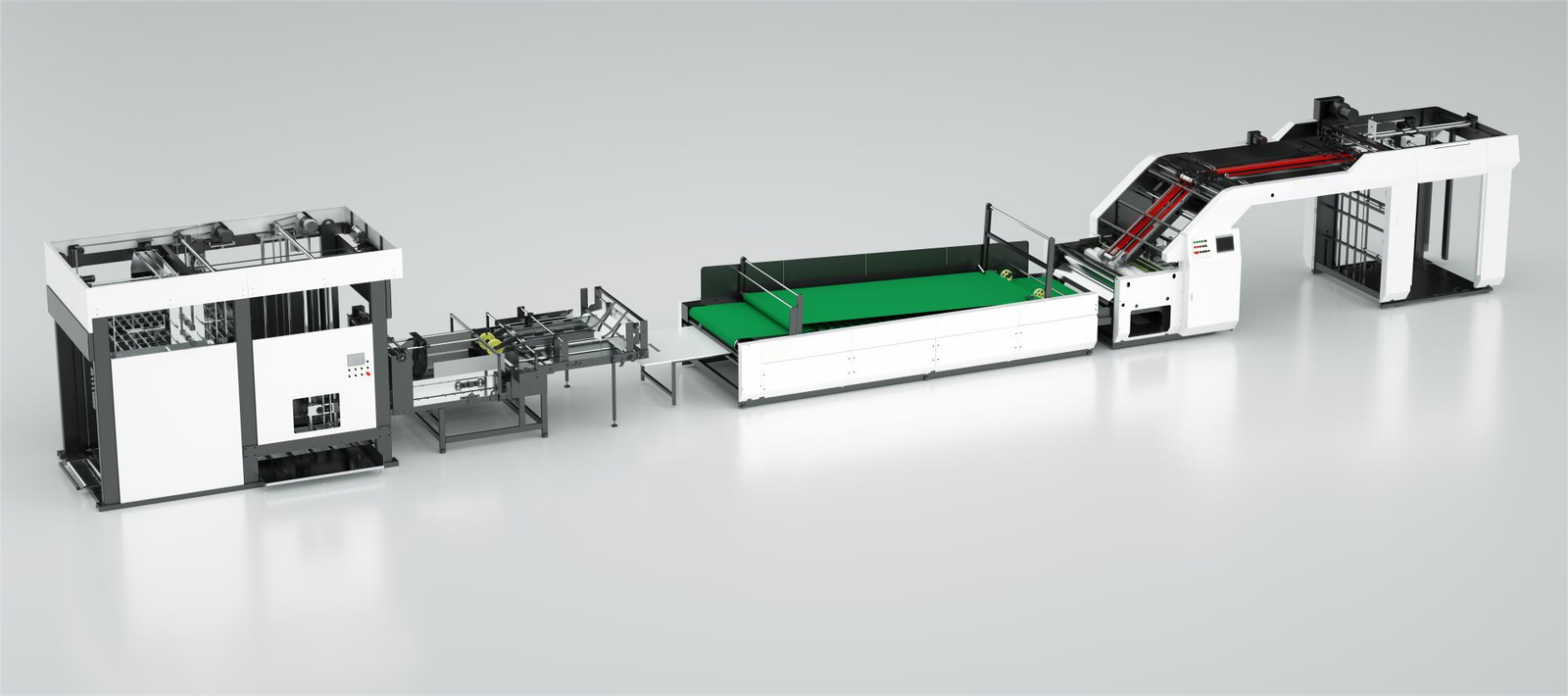
SAGLIN builds and ships five to ten machines every month, with laminating and finishing lines now running in more than 20 countries. The SAGLIN lamination platform spans thirteen models across three series, with working widths from 800 to 2100 mm and speeds up to 12,000 sheets/hour:
- Flute lamination series (DX-1180 to DX-2100). Automatic litho-to-corrugated laminators for e-commerce boxes, shelf-ready packaging and displays. The SAGLIN-DX-1450 (1450×1450 mm, up to 12,000 sheets/h) is the workhorse format for most box plants.
- Cardboard lamination series (DX-800 to DX-1410). Board-to-board laminators with ±0.5 mm registration for premium retail packaging; the SAGLIN-DX-1207 covers the popular 1200×720 mm format at 150 sheets/min.
- Multi-ply specialists. The DW-1650 builds 5-ply heavy-duty board for industrial transit packaging, and the Maestro DXs series laminates 3 layers in a single pass.
Every line ships with installation, operator training, a 12-month warranty and long-term spare-parts support. See our services page for details.
Flute laminating machine models compared
The table below compares SAGLIN’s corrugated and board laminators by working size, speed and registration, so you can match a flute laminator machine to your largest layout and target output. The corrugated models run litho-to-flute; the board-to-board (cardboard) models hold tighter registration for rigid packaging.
| Model | Type | Max sheet (mm) | Speed | Registration | Best for |
|---|---|---|---|---|---|
| DX-1180 | Corrugated | 1180 × 1180 | 30–170 m/min | ±1 mm | Entry / compact box plants |
| DX-1450 | Corrugated | 1450 × 1450 | Up to 12,000 sheets/h (150 m/min) | ±1 mm | Volume workhorse, most-chosen format |
| DX-1650 | Corrugated | 1650 × 1650 | 30–170 m/min | ±1 mm | Large-format cartons & displays |
| DX-1720 | Corrugated | 1720 × 1720 | 30–170 m/min | ±1 mm | Wide-format work |
| DX-2100 | Corrugated | 2100 × 2100 | 30–150 m/min | ±1 mm | Super-wide / highest output |
| DW-1650 | Multi-ply (5–7 ply) | 1650 × 1400 | 5,000 sheets/h | ±1 mm | Heavy-duty transit board, twin feeder |
| DX-800 | Cardboard (board-to-board) | 800 × 700 | 150 sheets/min | ±0.5 mm | Small-format premium boxes |
| DX-1207 | Cardboard (board-to-board) | 1200 × 720 | 150 sheets/min | ±0.5 mm | Best-selling retail-box format (shown in the video above) |
| DX-1210 | Cardboard (board-to-board) | 1200 × 1000 | 105 sheets/min | ±0.5 mm | Extended-length rigid boxes |
| DX-1410 | Cardboard (board-to-board) | 1410 × 1000 | 105 sheets/min | ±0.5 mm | Wide-format premium packaging |
The corrugated models accept top sheets of 120–600 gsm onto 0.5–10 mm board (A–N flute, 3-, 5- and 7-ply); the board-to-board models laminate 100–800 g/m² face stock onto 180–1800 g/m² board. All models feature servo or planetary-drive registration, automatic gluing with adjustable film, and automatic stacking. For full drawings and electrical specs on any model, ask our engineers.
Frequently asked questions
What is a flute laminating machine?
A flute laminating machine bonds a pre-printed litho sheet onto corrugated (fluted) board, producing high-graphics boxes that keep the strength of corrugated with the print quality of offset. It automates feeding, gluing, registration, pressing and stacking in one line, and is also called a flute laminator, flute laminator machine or litho laminator.
What is the difference between a flute laminating machine and a film laminating machine?
A flute laminating machine glues a printed paper sheet onto corrugated or thick board (sheet-to-board). A film laminating machine applies a thin BOPP or specialty film onto a printed sheet for protection and finish (film-to-sheet). They are different processes; many converters use both in sequence. The two machines are compared station by station in our guide to film lamination vs flute lamination.
Is a litho laminator the same as a flute laminator?
Yes. “Litho laminator” is the common North American name for a flute laminating machine. It refers to laminating a litho (offset) printed sheet onto corrugated board, and the machines are identical in function.
How fast can an automatic flute laminating machine run?
Modern automatic flute laminators run 30–170 m/min line speed. In practice that means up to about 12,000 sheets per hour on a mid-format machine such as the SAGLIN-DX-1450, depending on sheet size and board grade. Semi-automatic machines are operator-limited to roughly 3,000–4,000 sheets/hour.
Which flute types and materials can a flute laminator handle?
Standard machines laminate printed sheets from around 120 gsm paper up to heavy duplex board onto E, F, B and C flute single-face corrugated, as well as board-to-board work. Multi-ply models build 3-ply and 5-ply laminated board in one pass.
What is the difference between a semi-automatic and an automatic flute laminating machine?
A semi-automatic flute laminator feeds the top sheet automatically but the bottom board by hand, so real output is operator-limited to roughly 3,000–4,000 sheets/hour and suits short or mixed runs. An automatic flute laminating machine feeds both webs, registers by servo and stacks automatically, reaching up to about 12,000 sheets/hour with one operator. If lamination is a daily process, the automatic machine pays back quickly in labour and waste.
How much does a flute laminating machine cost?
Price is set by configuration rather than by a catalogue figure, and the spread across the market is roughly seventy to one between a basic semi-automatic machine and a flagship wide-format full-servo line. Format, automation level, registration system, ply capability and options move every number. The practical step is to request a quotation against your sheet sizes and output target.
Why don’t suppliers publish a flute laminator price?
Because these machines are configured to the buyer, not stocked. A flute laminator price moves with maximum sheet size, automation level, registration system, ply capability and options. Freight, duty and installation then change again with destination. A single catalogue figure would mislead more buyers than it helps. Relative price bands by automation class are collected in our flute laminating machine price guide; for a figure you can actually budget against, send your maximum sheet size, board grades and target output and we will quote your configuration within 24 hours.
What is a 5-ply flute laminator, and does it cost more?
A 5-ply flute laminator (such as the SAGLIN DW-1650) builds up laminated board from several layers in a single pass, typically a printed top sheet plus multiple flute and liner layers, for heavy-duty transit and industrial packaging. Because it carries extra feeding and gluing stations and a twin-feeder design, a multi-ply machine costs more than a comparable single-pass flute laminator. The exact figure depends on format and automation, so request a quotation for your ply build-up and output target.
Get a flute laminating machine quote
Tell us your maximum sheet size, board grades and target output, and our engineers will recommend the right SAGLIN laminator configuration, with a witnessed demo on your own substrates if required.
Reviewed and updated by the SAGLIN engineering team on 10 August 2026.
Related reading: Window Patching Machine: Buyer’s Guide for Cartons & Boxes

