Automatic vs Semi-Automatic Flute Laminator
Buy an automatic flute laminator machine once lamination becomes a daily process rather than an occasional job. Below roughly 150,000 sheets a month a semi-automatic machine still earns its place on short runs and mixed work. Above that, the gap in labour and waste grows faster than the difference in machine price, and it keeps growing every month you own the machine.
This article compares the two automation levels station by station, puts real numbers on the crew each one needs, and shows where the break-even actually sits. It is a companion to our flute laminating machine buyer’s guide, which covers the process itself, and to our price guide, which covers what moves a quotation.

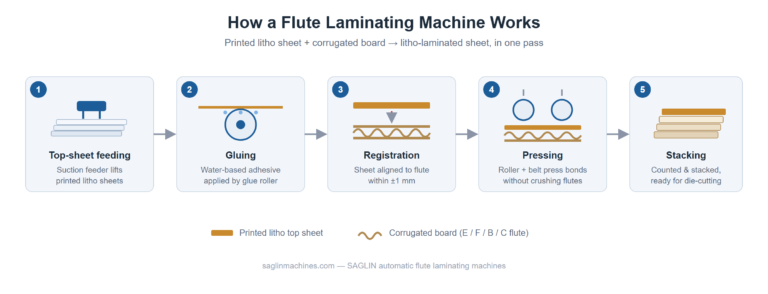
What “automatic” actually means on a flute lamination line
On a flute lamination line, automatic refers to five separate stations, and a machine sold as automatic may only automate three of them. Every laminator feeds the printed top sheet automatically, so that station tells you nothing. The question worth asking a supplier is what happens at the other four.
| Station | Semi-automatic | Fully automatic |
|---|---|---|
| 1. Top-sheet feeding | Automatic feeder | Servo offset feeder, 120–600 gsm without a setup change |
| 2. Bottom-sheet feeding | By hand. An operator lays every board on the belt | Dual-servo suction feeder, 2–7 ply |
| 3. Registration | Mechanical stops, corrected by eye | Multi-sensor with servo timing, ±1 mm at full speed |
| 4. Pressing | Roller and belt press, often fixed pressure | Roller and belt press with adjustable pressure |
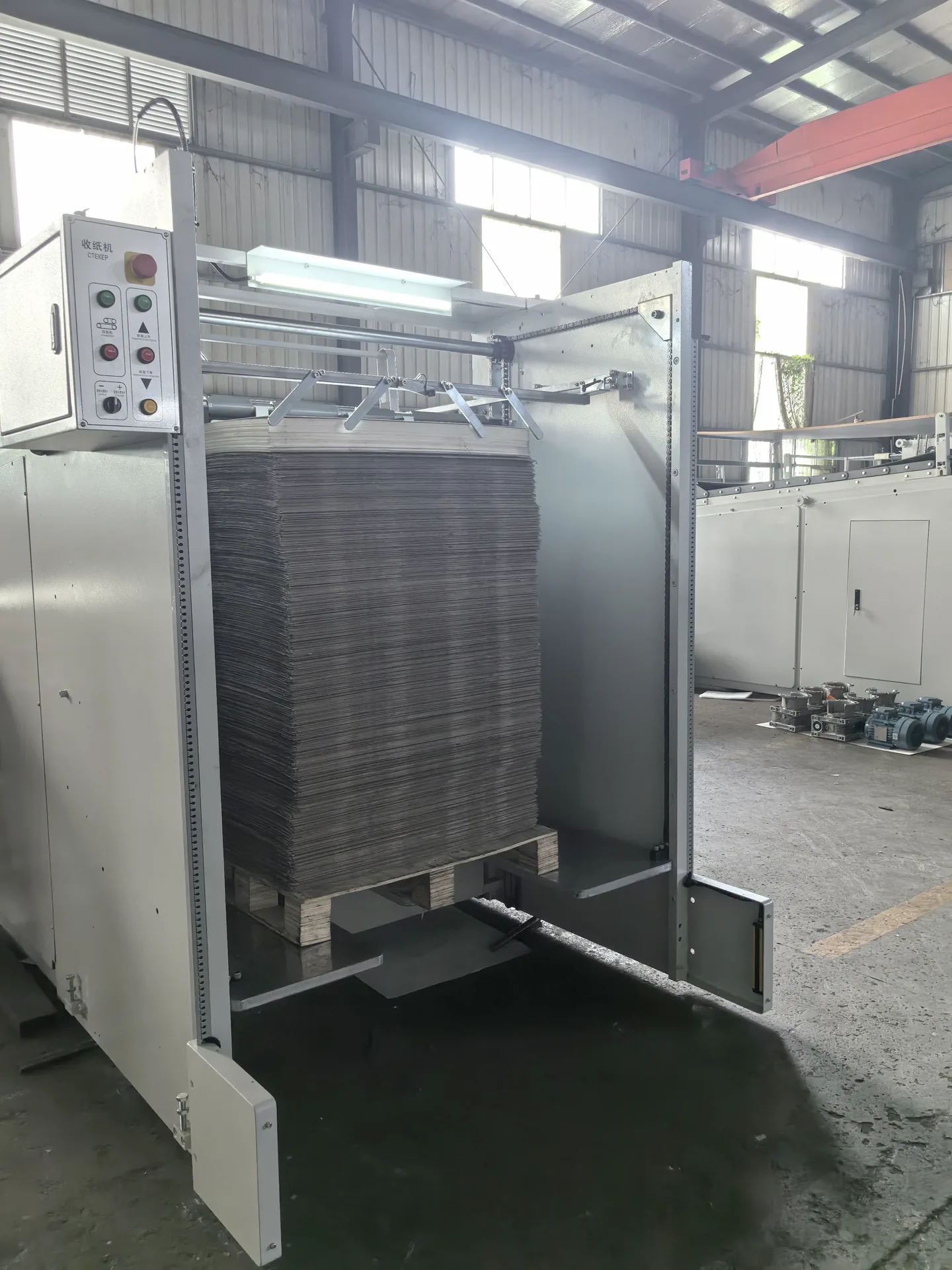
| 5. Delivery | Hand stacking, one to two people | Flip-flop stacker, automatic pile turning |
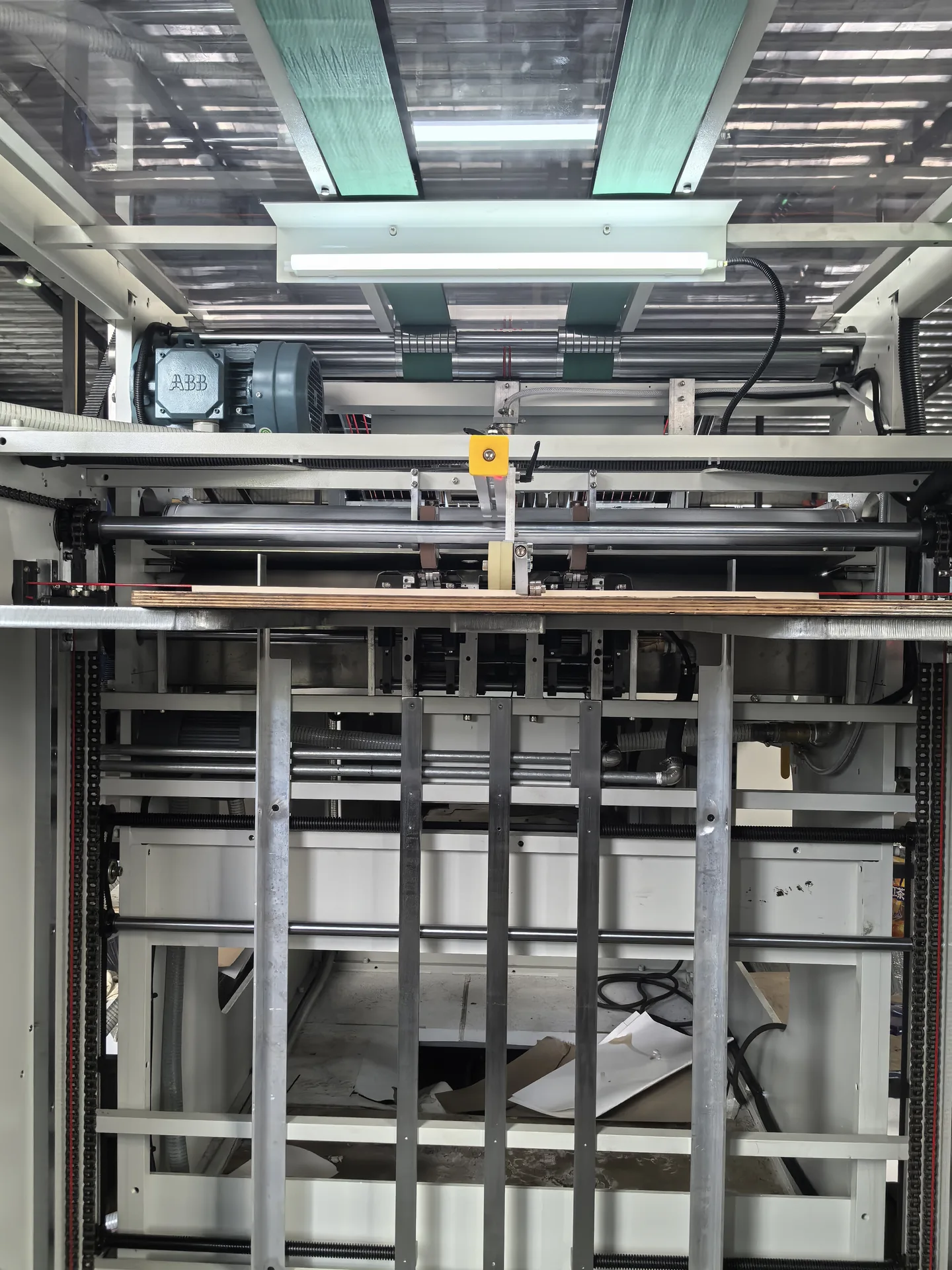
Station 2 is the real dividing line. Once a person places each sheet of corrugated board, the machine can only run as fast as an arm moves, and the register accuracy of everything downstream inherits whatever variation that arm introduces. A dual-servo bottom feeder removes both limits at once, which is why it costs what it costs.
Automatic flute laminator vs semi-automatic: seven differences that matter
Seven specifications separate the two classes in daily use, and only one of them is speed. The table below uses sustained figures with one experienced crew rather than catalogue peaks, because peak numbers assume calibrated stock and a fresh operator.
| What you compare | Semi-automatic | Automatic |
|---|---|---|
| Sustained output | 3,000–4,000 sheets/h | Up to 12,000 sheets/h (150 m/min mechanical) |
| Operators per shift | 2–4 | 1 plus a shared helper |
| Registration | Operator-dependent, drifts as the shift goes on | ±1 mm held at production speed |
| Minimum sheet size | Small formats are easy | 360 × 360 mm on the 1450 mm class |
| Changeover | Fast, few settings to change | Longer, though job memory recalls the settings |
| Ply capability | Usually 3-ply work | 2–7 ply, including 5-ply shippers |
| Best fit | Short runs, mixed work, occasional lamination | Daily lamination above roughly 150,000 sheets/month |
Note the fourth row, because it is the one buyers discover too late. A large automatic machine has a minimum sheet size as well as a maximum, and cosmetics or electronics work below that limit will not run on it. A plant with a genuinely mixed size range sometimes keeps the old semi-automatic machine for small formats rather than trading it in.
The break-even is in operator-hours, not on the invoice
The honest comparison is operator-hours per month, because that is the number that repeats. Divide your monthly volume by the sustained output of each machine, then multiply by the people standing on it. A semi-automatic machine at 3,500 sheets/h with three people consumes about 86 operator-hours per 100,000 sheets. An automatic flute laminating machine at 10,000 sheets/h with one operator and a shared helper consumes about 15.

Read the gap rather than either line. At 250,000 sheets a month the difference reaches about 180 operator-hours, which is one full-time position on one shift. That is the point where the labour argument alone settles the question, and it ignores waste, so the real threshold arrives earlier. Our flute laminating machine price guide puts the full cost-per-sheet crossover nearer 150,000 to 200,000 sheets a month.
When a semi-automatic flute laminator is still the right buy
A semi-automatic flute laminator is the correct choice in three situations, and none of them is a compromise. The first is genuinely low volume: under about 5,000 sheets a day, an automatic line spends most of its life idle while it depreciates. The second is short, mixed runs, where changeover time dominates and a simpler machine changes over faster.
The third is small-format work. If most of your jobs sit under the minimum sheet size of the automatic class, the faster machine cannot run them at all. A cosmetics carton plant laminating 250 × 300 mm blanks is better served by a machine built around that range.
There is also a staffing case. In markets where labour is inexpensive and reliable, and where the plant already runs a stable crew, the operator-hour gap converts into a smaller cost gap than the chart suggests. The arithmetic stays the same, but the price you put on an hour changes the answer.
What actually changes on the factory floor
Three things change on the floor, and only one of them appears in a specification sheet. Speed is the obvious one. The other two are waste and consistency across a shift, and they are usually worth more.
Waste on a flute laminator is expensive because the sheet you scrap is already printed. A misregistered top sheet takes the corrugated board with it, so every registration error costs the most valuable component in the job. Automatic registration holds ±1 mm at full production speed because servo timing corrects the top sheet against sensors reading the board, rather than against a mechanical stop set at the start of the run.
Consistency is the quiet difference. A hand-fed line produces its best work in the first two hours and its worst in the last two. An automatic line produces the same sheet at 07:00 and at 15:00, which matters when the customer is a brand owner auditing colour and edge alignment across a delivery.
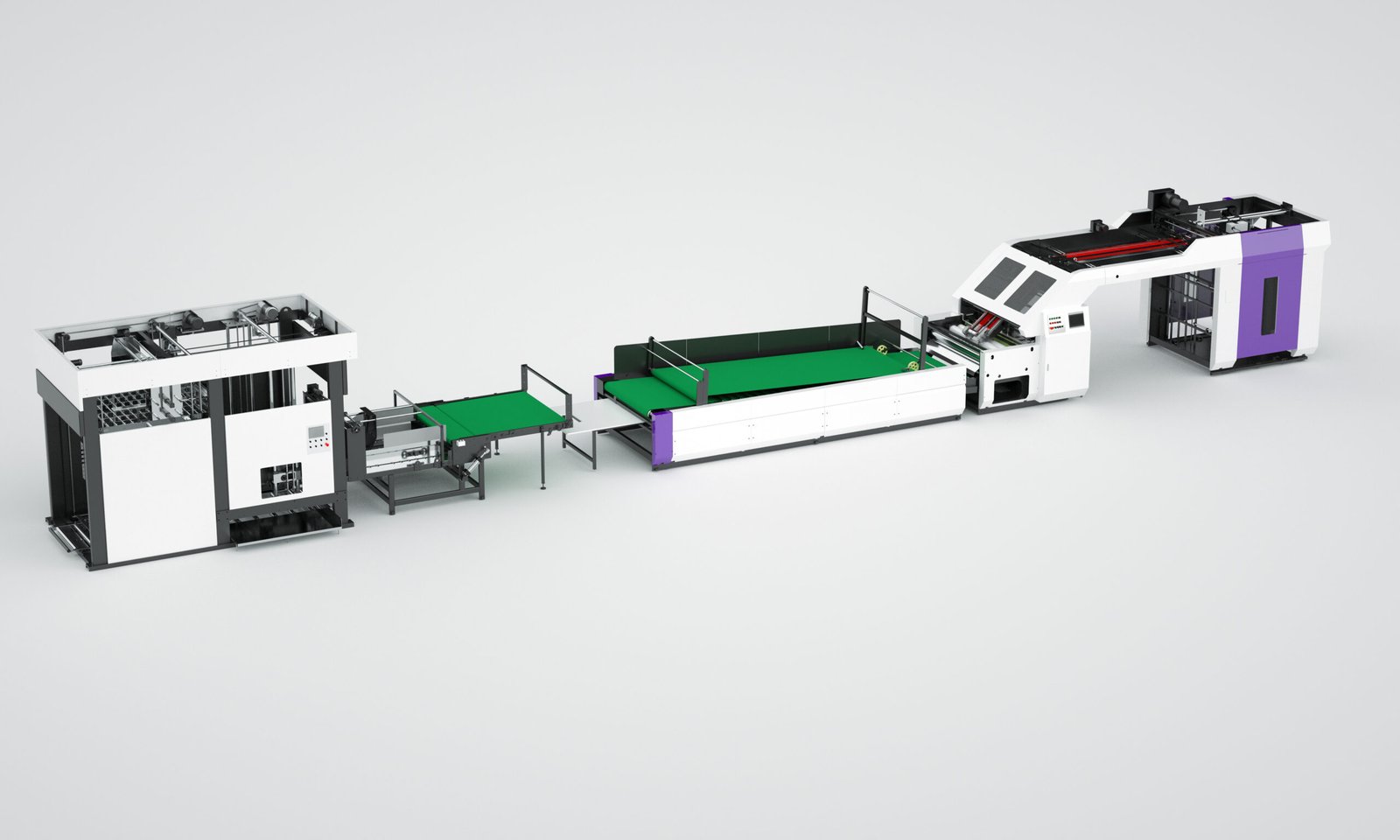
A fourth change never appears as a decision on any specification sheet: floor space. A complete automatic line in the 1450 mm class measures about 15 m long, 2.5 m wide and 2.6 m high, and it needs that length in a straight run with pile space at both ends. A semi-automatic machine is shorter but wants clear working room on both sides, because two people stand beside the belt. Measure the aisle before you compare the machines.
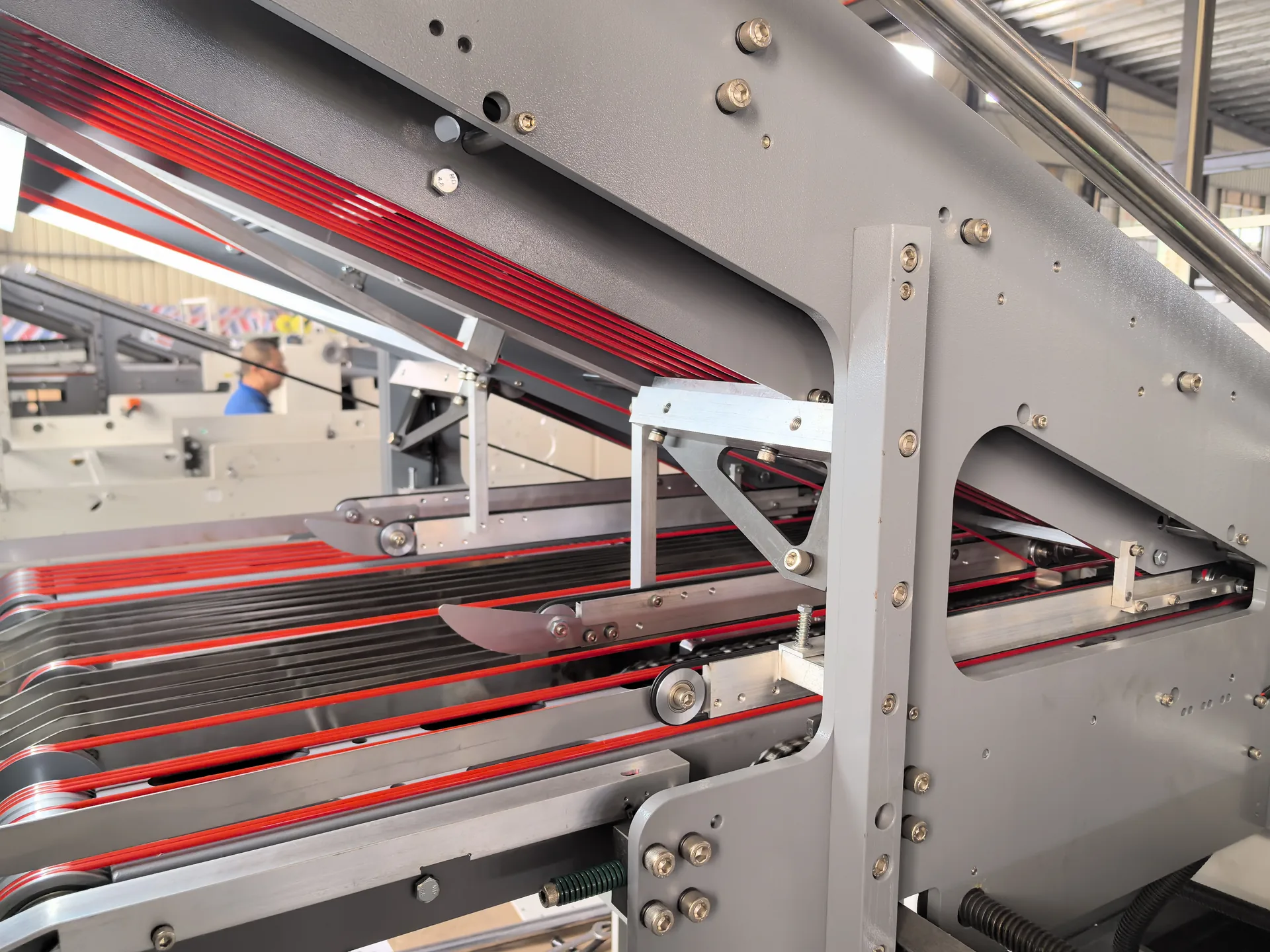
We saw all three during factory acceptance testing of a DX-1207 line in July 2025, report SLM20250604, shipped FCA Dongguan to a packaging manufacturer in Russia. The customer ran their own board through a 4,100 mm pressing section rather than our sample stock, which is the only test that settles the waste question. Their machine went into production after commissioning by our Moscow partner and has been running since.
Can you upgrade a semi-automatic machine later?
In practice, no. The bottom-sheet feeder, the registration system and the drive train are designed together, so adding a servo feeder to a semi-automatic frame means replacing most of the machine. Suppliers who offer the upgrade are usually quoting a new line with a trade-in.
The realistic path is different. Plants that outgrow a semi-automatic machine keep it for small-format and short-run work and buy an automatic flute laminator for the volume jobs. Two machines with clear roles beat one compromised machine, and the older one costs nothing to keep once it is written down.
A used automatic machine is the third path, and it is worth checking properly. Ask for the servo drives and sensors to be powered up and run empty at full speed before you agree anything, because feeder and registration electronics are the expensive part to replace and the part that ages first. Ask who supplied the original control system, then confirm those parts are still available. A frame lasts decades. The electronics behind station 2 decide whether the machine is a bargain.
SAGLIN automatic flute laminator machines
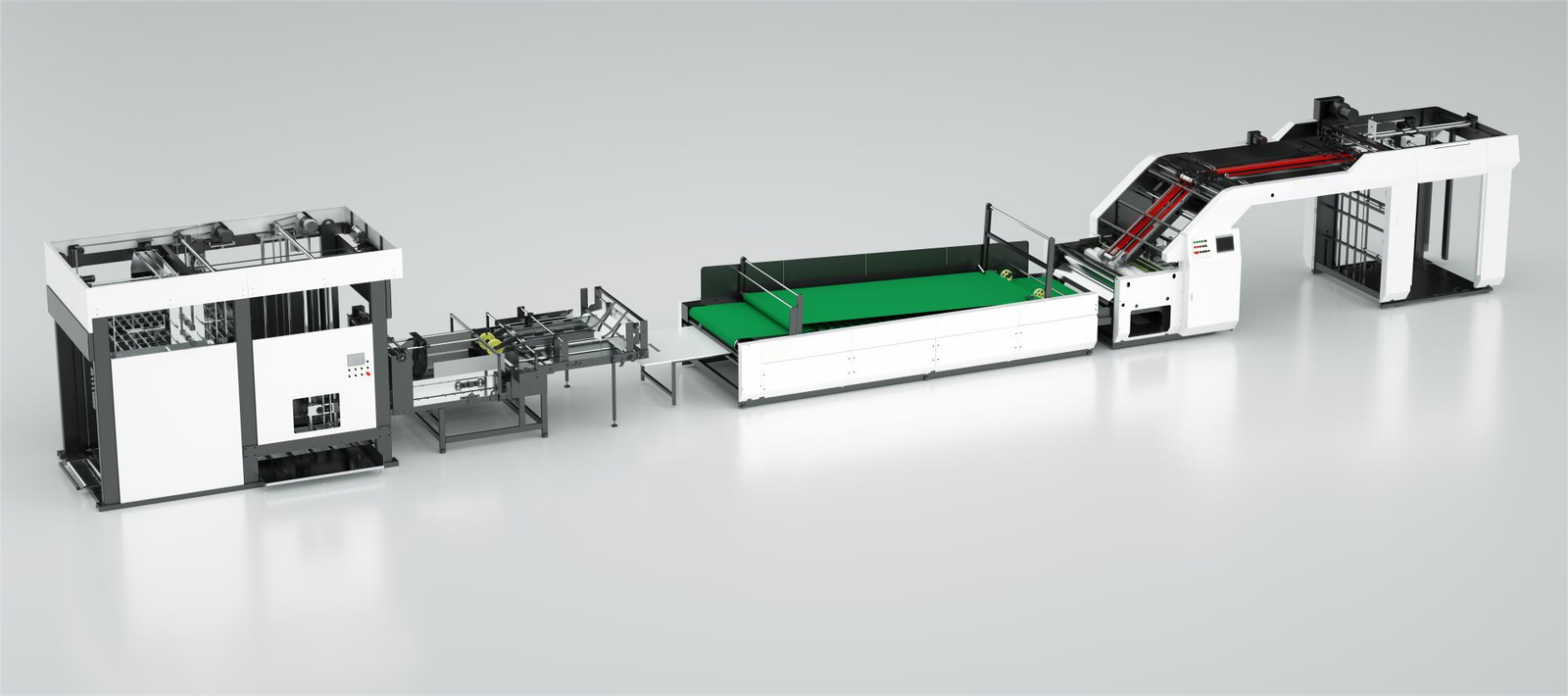
SAGLIN builds automatic machines only. There is no semi-automatic model in the range, so if the arithmetic above points you to a semi-automatic machine, we are not the right supplier for it, and we would rather say so before you send drawings. Every automatic flute laminator machine we build sits on one lamination platform, which covers thirteen models from 800 to 2100 mm working width.
The SAGLIN-DX-1450 is the volume workhorse for corrugated work: 1450 × 1450 mm maximum sheet, 360 × 360 mm minimum, up to 12,000 sheets/h, ±1 mm registration, 25 kW total power and 25–30 gsm glue consumption. For board-to-board work the SAGLIN-DX-1207 covers the 1200 × 720 mm retail format at 150 sheets/min with ±0.5 mm registration. Both run as a stand-alone litho laminator or as the core of a complete box line.
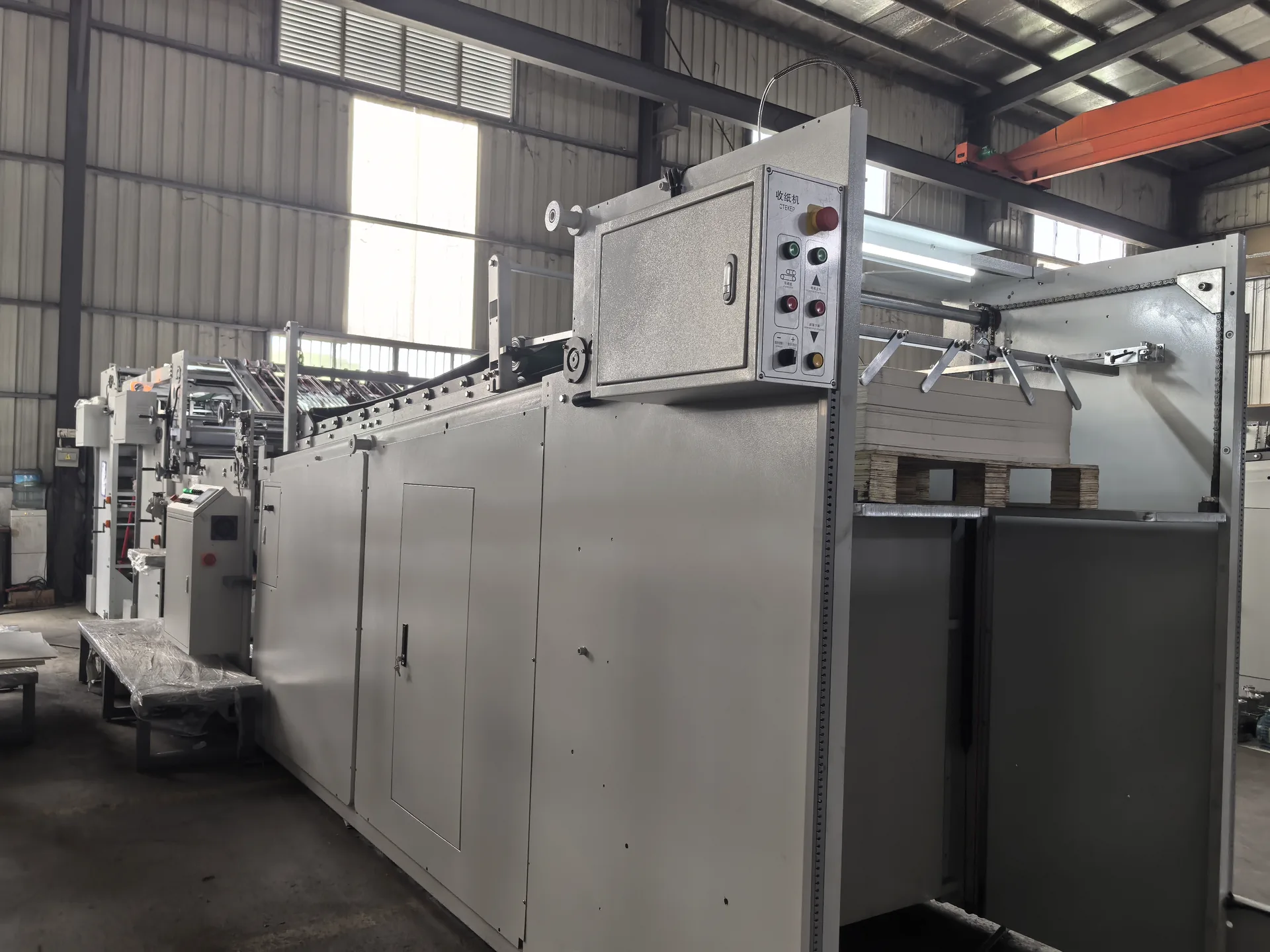
Five to ten machines leave our works every month, and SAGLIN laminating and finishing lines now run in more than 20 countries. Lines for Russia and the CIS ship at 380V / 50Hz with EAC support, and our Moscow partner HD RUS commissions them on site. Every line includes installation, operator training and a 12-month warranty, with details on our services page. You can read how one line went from acceptance test to production in our DX-1207 case study.
Frequently asked questions
What is an automatic flute laminator?
An automatic flute laminator bonds a printed litho sheet onto corrugated board with no manual sheet handling. It feeds both the top sheet and the bottom board automatically, registers them with servo-controlled sensors, presses them and stacks the finished pile. One operator runs the line, typically with a helper shared across the plant.
How many operators does an automatic flute laminator need?
One operator plus a shared helper on a modern line. A semi-automatic machine needs two to four people, because someone has to lay every sheet of board on the belt and someone has to take the finished pile off the delivery. That difference is the main running cost between the two classes.
Can a semi-automatic laminator handle large-scale production?
Only by adding people and hours. At a sustained 3,000–4,000 sheets/h, a semi-automatic machine can physically produce 300,000 sheets a month, but it will consume around 260 operator-hours to do it while an automatic line uses about 45. Above roughly 150,000 sheets a month the automatic machine is usually cheaper per sheet.
Which type of laminator is more cost-effective?
It depends entirely on volume. Under about 5,000 sheets a day the semi-automatic machine wins on total cost, because the automatic line sits idle while it depreciates. Above that, labour and waste move the answer, and by 250,000 sheets a month the labour gap alone is a full-time position.
What maintenance does a fully automatic flute laminating machine need?
Daily glue-system wash-up, weekly belt and sensor cleaning, and scheduled lubrication. Machines with centralised automatic greasing remove the main source of missed maintenance on the main shafts. Budget for glue rollers and suction components as wear parts, and keep a small spares kit on site, since an idle laminator also stops the die-cutter behind it.
Can a semi-automatic flute laminator be upgraded to fully automatic?
Not economically. The bottom feeder, registration system and drive train are engineered as one, so an upgrade replaces most of the machine. Plants that outgrow a semi-automatic machine usually keep it for small-format and short-run work and add an automatic line for volume jobs.
Get a configured recommendation
Send us your monthly volume, your largest and smallest sheet size and the board grades you run. Our engineers will tell you which automation level fits, including the case where that answer is not one of our machines, and quote your configuration within 24 hours.
Related reading: Top 10 Flute Laminating Machine Manufacturers (2026)