Automatic Cardboard Laminator Case Study: DX-1207 in Russia
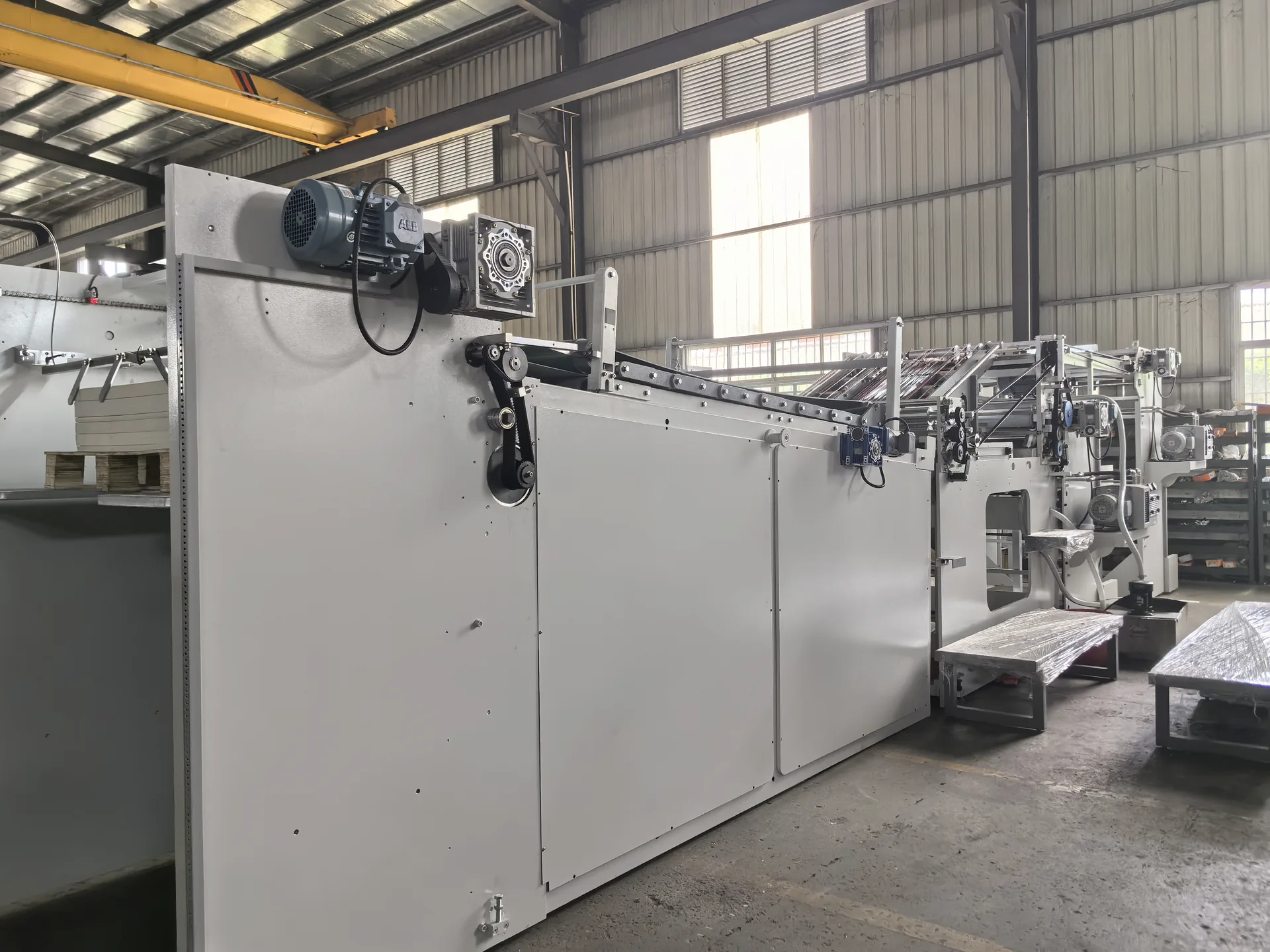
In July 2025 a packaging manufacturer in Russia signed off the factory acceptance test of a SAGLIN DX-1207 automatic cardboard laminator at our production base in Dongguan, Guangdong. The machine was packed into three export crates, shipped on FCA terms, commissioned at the customer’s plant — and has now been running paper-to-board lamination in daily production for a full year. This case study walks through what the customer needed, how the acceptance test was run, and what the first year looked like.
Project snapshot
| Machine | SAGLIN DX-1207 Auto Cardboard Laminator |
| Customer | Packaging manufacturer, Russia |
| Application | Laminating printed top sheets onto heavy paperboard (paper-to-board) |
| Acceptance test | July 2025, Dongguan — full check, inspection report SLM20250604 |
| Delivery | Three export packages, FCA Dongguan |
| Status | In daily production since 2025 |
What the customer needed
The customer produces paperboard packaging that combines offset-printed top sheets with heavier board underneath — the classic job an automatic cardboard laminator exists for. Their requirements were specific:
- Registration the operator doesn’t have to chase. Printed sheets have to land on the base board accurately enough that the die-cut line stays inside the artwork — on the DX-1207 that means ±0.5 mm lamination precision on smooth paperboard.
- A wide substrate window. Top sheets from 100 to 800 g/m² and base stock from 180 to 1,800 g/m², so one machine covers everything from litho labels on cartonboard to rigid-box work.
- Production speed, not sample speed. Rated output of 150 sheets per minute at a maximum sheet size of 1,200 × 720 mm.
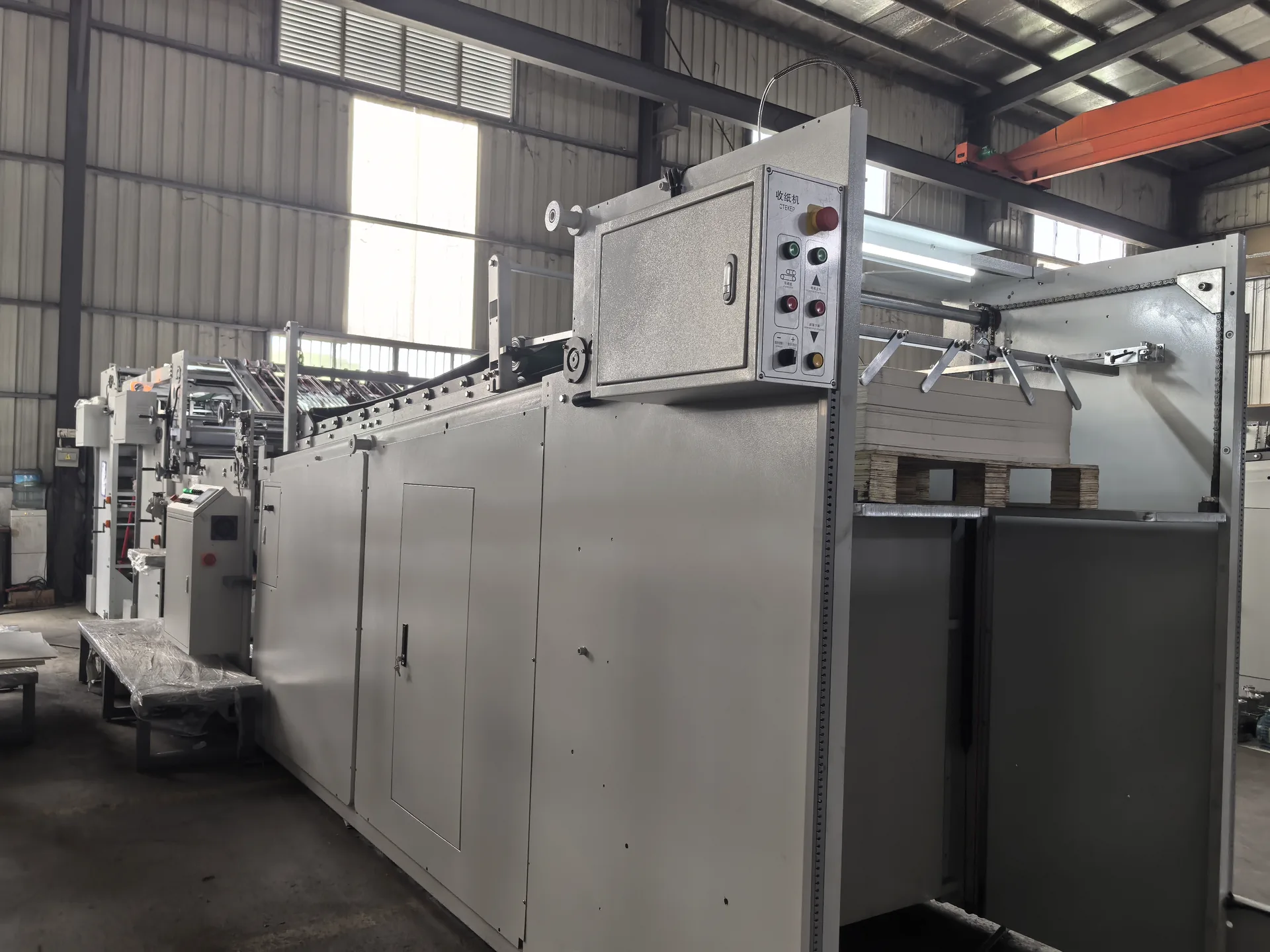
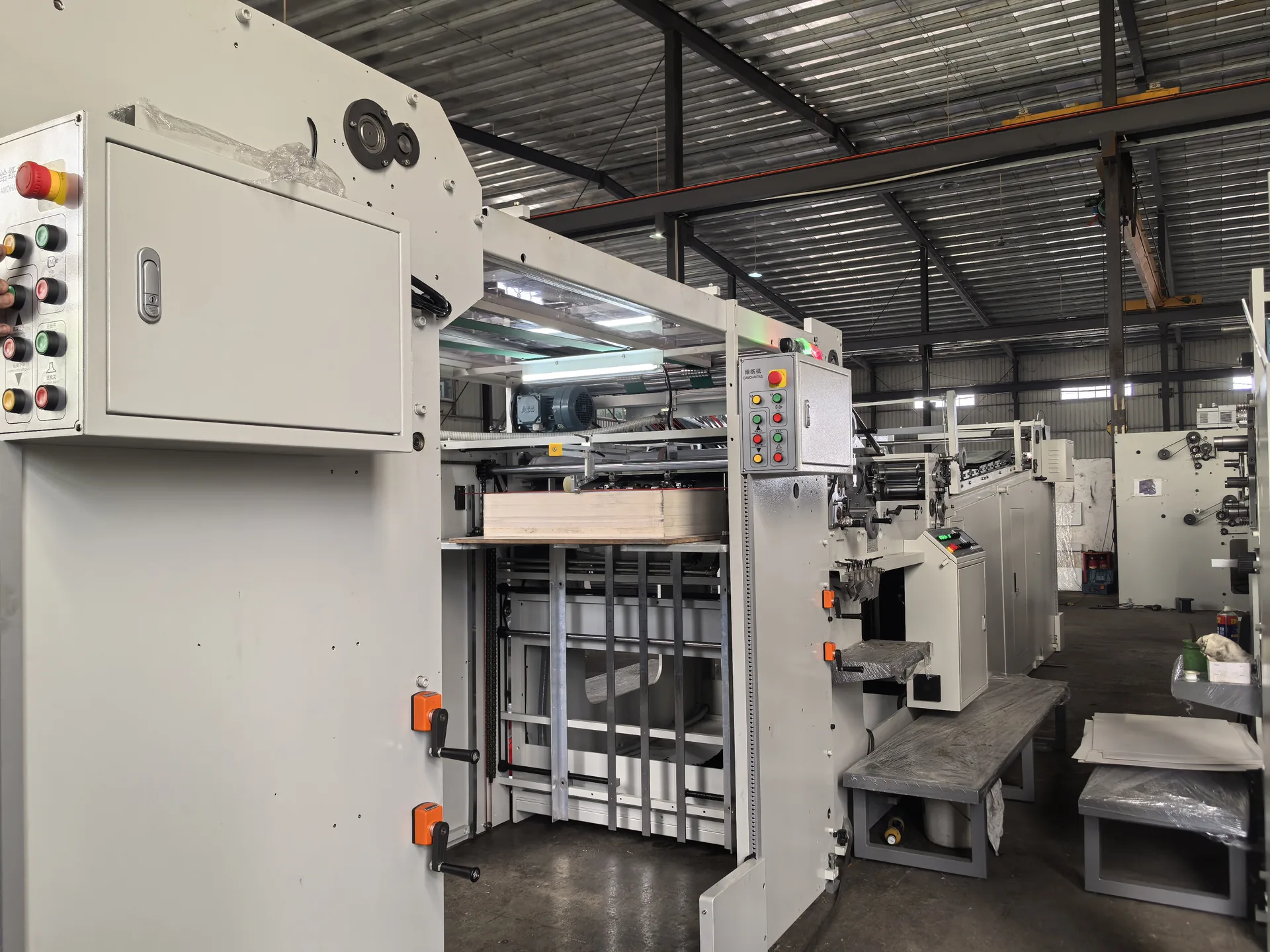
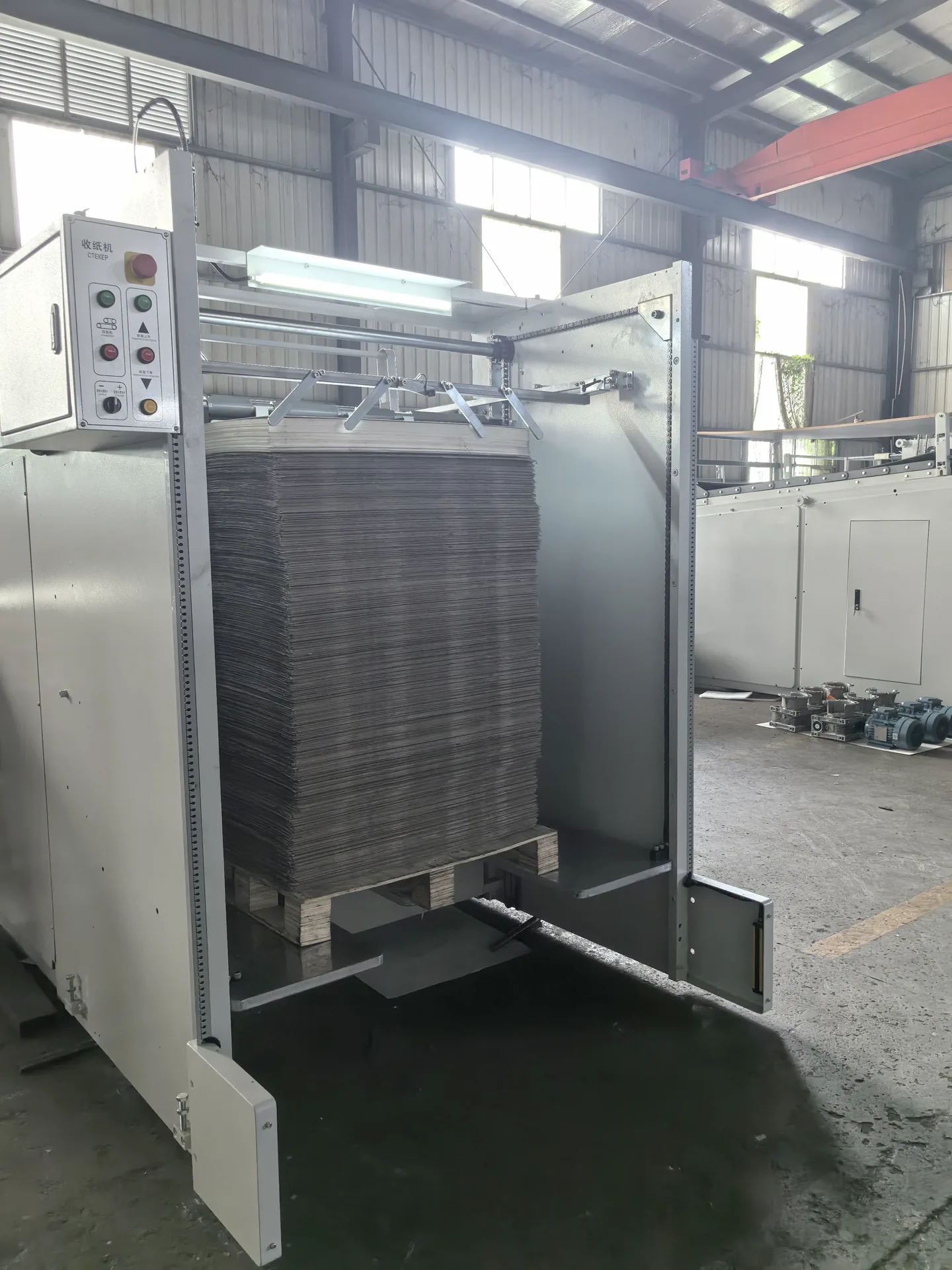
- Controls their operators can actually read. The machine was built with bilingual Chinese–Russian panel labels — the stacker reads СТЕКЕР, the feeder САМОНАКЛАД — so the crew works in their own language from day one.
The factory acceptance test, station by station
On 15 July 2025 the machine went through a documented full-check inspection (report ref. SLM20250604) with the line assembled and running live material — not a static showroom check. The test walked every station of the laminator:
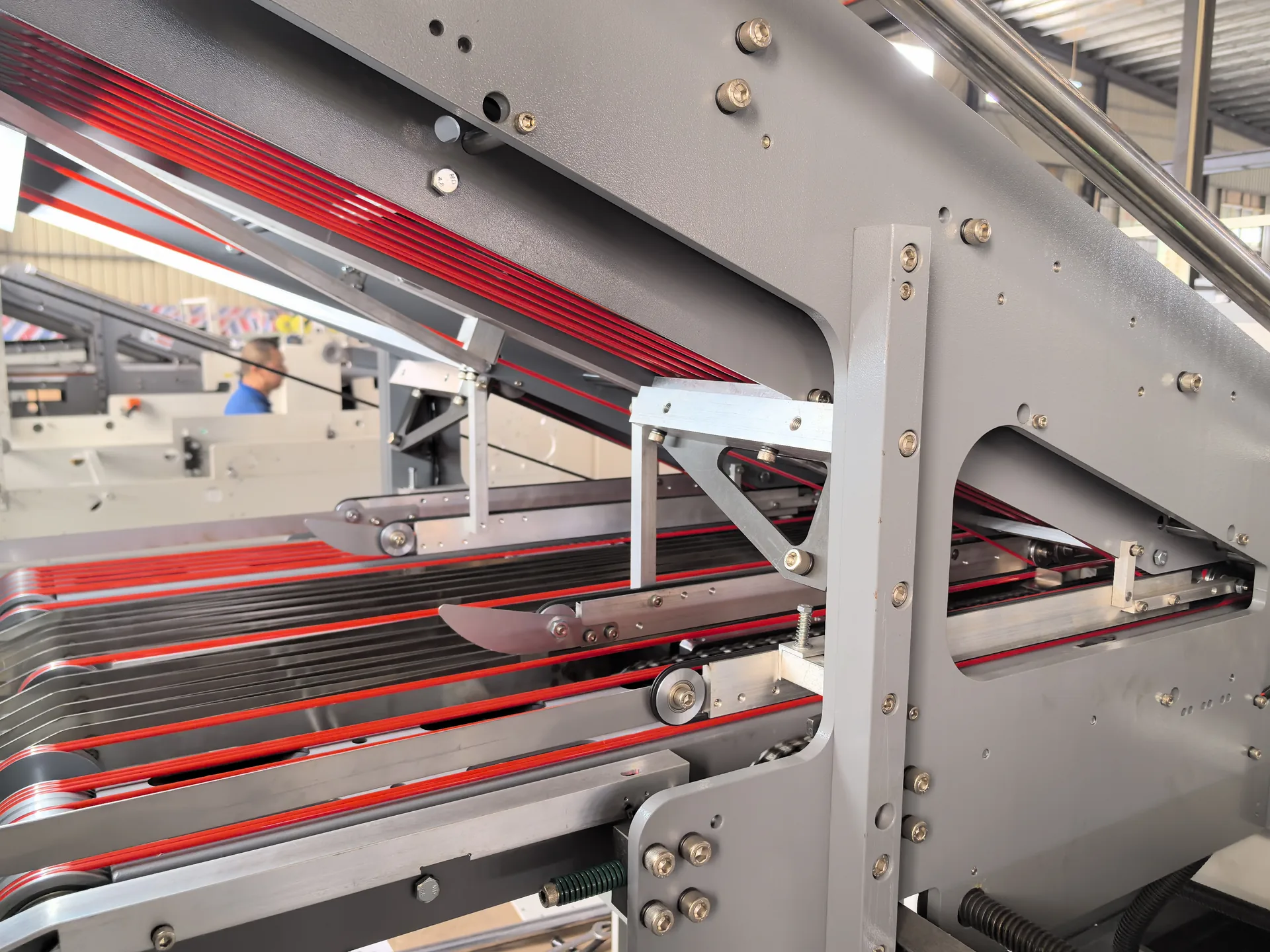
- Top paper feeder. Front-top suction feeding of the printed sheet, checked for double-sheet detection and consistent separation at speed.
- Bottom feeder. The heavy base board is fed from a pallet lift, so thick stock runs without manual handling.
- Glue coating unit. Coating weight verified down to a 0.02 mm film with automatic glue-level control — enough adhesive to bond, little enough that board stays flat.
- Aligning system. Top sheet and base board are registered dynamically before the nip; this is where the ±0.5 mm figure is won or lost.
- Pressing conveyor. The 4.1-metre pressing section consolidates the bond under distributed pressure so boards exit flat and cured.
- Automatic stacker. Finished boards collect into a jogged pile on a pallet, ready for die-cutting.
The inspection followed a formal sampling standard (ANSI/ASQ Z1.4 single-sampling, applied as a 100% check on the single machine), covering workmanship, function tests and export packing. The signed report went to the buyer before shipment — the same procedure we run for every export machine.
Packing and delivery
The line broke down into three export packages and shipped FCA from Dongguan. Bilingual labeling carried through to the crates, and the customer’s team reassembled and commissioned the line with our remote support. Because the DX-1207’s stations separate cleanly — feeders, laminating body, pressing conveyor, stacker — reassembly is a bolt-together job rather than a rebuild.
One year on
Twelve months after the acceptance test, the machine is in routine daily production and the customer reports it is running well. That is the result we aim for: the interesting thing about a laminator a year after installation is that there is nothing interesting to report — sheets in, bonded boards out, shift after shift.
The machine shipped with SAGLIN’s standard 12-month warranty; support continues past the warranty period with spare parts and remote diagnostics.
About SAGLIN
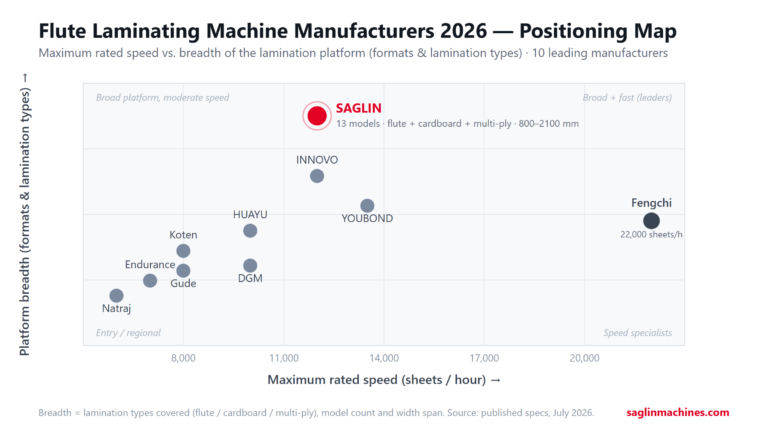
SAGLIN builds paper-to-board and flute laminating machines across thirteen models, installing 5–10 machines per month and exporting to more than 20 countries. If you are comparing suppliers, our guide to flute laminating machine manufacturers and the flute laminating machine buyer’s guide are honest places to start.
Running a similar paper-to-board application? Send us your sheet sizes and board weights and we will confirm whether the DX-1207 — or another model in the range — fits the job: request a quote.
Frequently asked questions
What does an automatic cardboard laminator do?
It glues a printed top sheet onto a heavier base board — paperboard or corrugated — in register, producing the laminated blanks used for rigid boxes, premium cartons and displays. Feeding, gluing, aligning, pressing and stacking all run automatically.
What happens during a factory acceptance test?
The assembled machine runs live material at the factory while an inspector checks every station — feeding, glue coating, registration, pressing, stacking — plus workmanship and export packing, against a documented checklist. The signed report goes to the buyer before the machine ships.
Can SAGLIN machines be delivered with Russian-language controls?
Yes. This machine shipped with bilingual Chinese–Russian panel labels throughout, and documentation to match. Localization is specified at order time.
What board weights can the DX-1207 laminate?
Top sheets from 100 to 800 g/m² and bottom stock from 180 to 1,800 g/m², up to a 1,200 × 720 mm sheet, at up to 150 sheets per minute with ±0.5 mm precision.