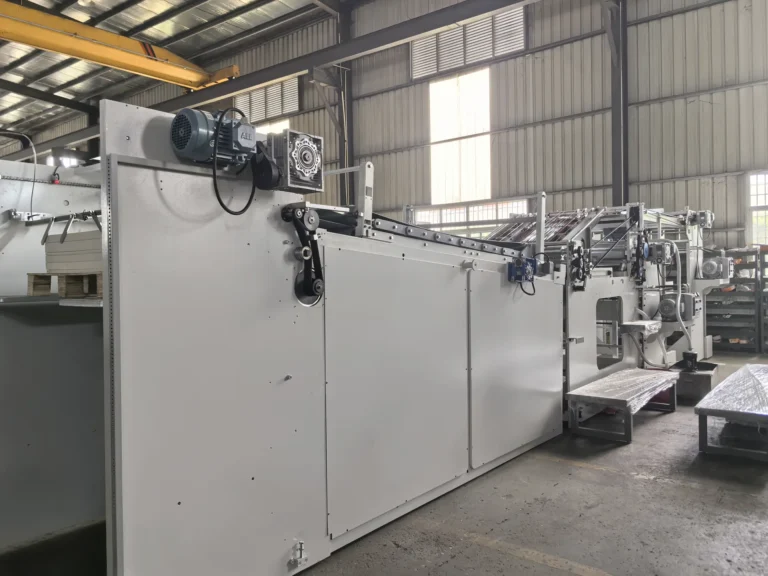
Window Patching Machine: 9 Key Criteria to Choose the Right One
Learning how to choose a window patching machine starts with knowing what it does: a window patching machine applies a clear plastic film over the die-cut window of a folding carton or box, so customers can see the product inside without opening the package. If you produce gift boxes, cosmetic cartons, food packaging or electronics boxes and you are deciding which machine to buy, this guide covers how to choose a window patching machine — how the process works, the machine types available, and the specifications that actually matter when you compare suppliers and request a quote.
What is a window patching machine?
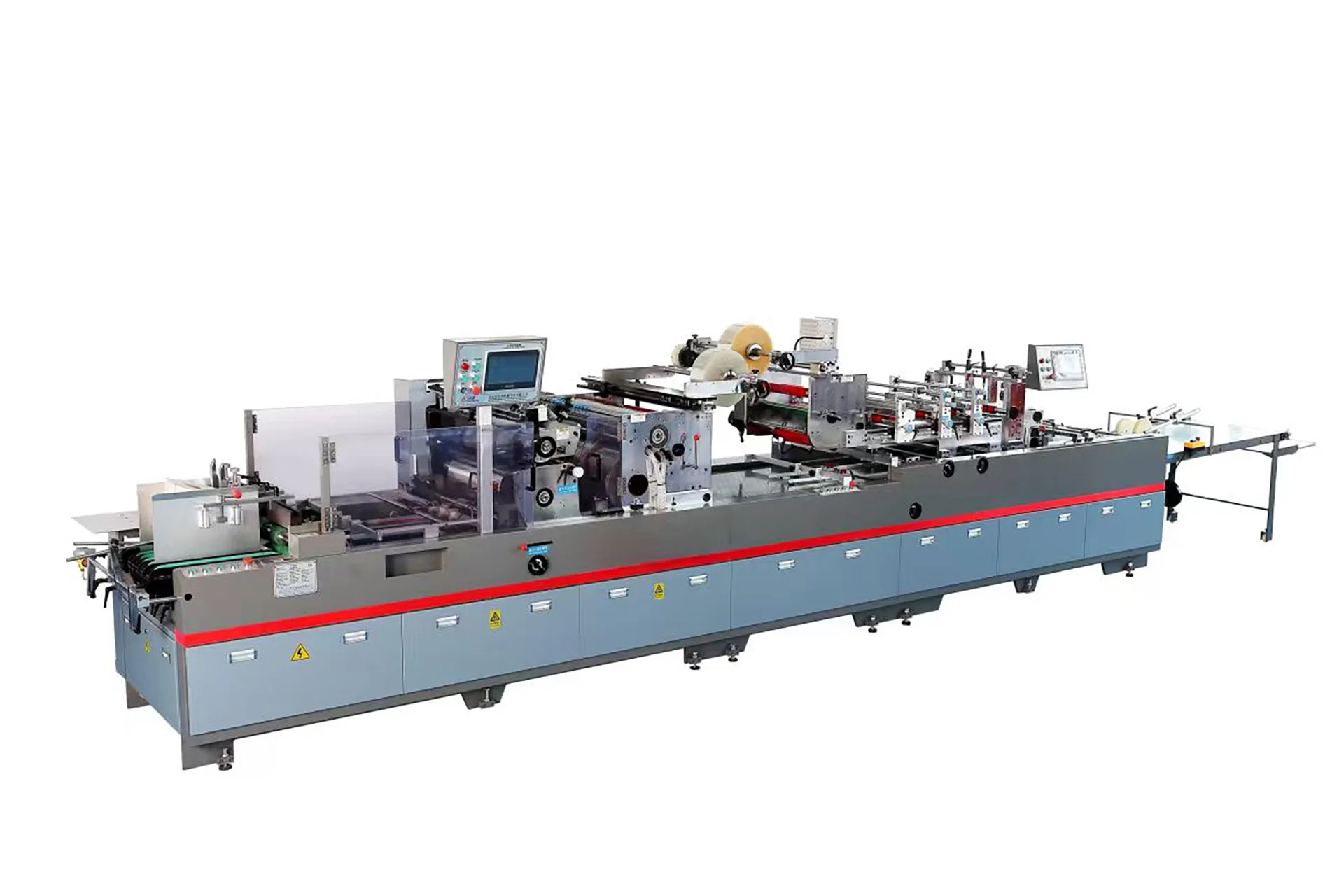
A window patching machine is a piece of post-press packaging equipment that bonds a transparent film — usually PET, PVC or BOPP — onto the inside of a printed, die-cut carton, covering the open “window” cut into the board. The result is a clean, glued-down film patch that protects the contents, lets them be seen on the shelf, and gives the package a more premium finished look.
The film is fed from a reel, cut to size, coated with adhesive, and pressed onto the carton in register with the die-cut opening. Because the window is the first thing a buyer notices at the point of sale, patch quality — clarity, flatness, and accurate registration — directly affects how the product sells.
How does window patching work?
Although machines differ in automation level, the core sequence is the same:
- Feeding — die-cut, pre-creased blanks are fed one at a time from a stack, typically by a high-speed friction or vacuum feeder.
- Gluing — a metered adhesive system applies a precise bead or film of glue around the window opening (or onto the film, depending on configuration). Most modern lines use water-based cold glue for fast tack and clean running.
- Film cutting & placement — clear film is drawn from the reel, cut to the right patch length, and positioned over the window.
- Pressing & bonding — rollers press the film to the board so the adhesive grips instantly, with little or no drying time needed.
- Stacking — finished, patched cartons are collected and stacked, ready for folding and gluing downstream.
High-speed production window patchers can run several hundred cartons per minute, so feeding stability and registration accuracy become the real bottlenecks as throughput climbs.
Where window patching machines are used
Window patching is common wherever brands want shelf appeal plus product visibility. Typical applications include:
- Gift boxes, wine and spirits boxes, and premium retail packaging
- Cosmetic and personal-care cartons
- Food packaging — bakery, confectionery, pasta, tea and dry goods
- Tissue and napkin boxes
- Consumer electronics, stationery and toy boxes
Types of window patching machine
Semi-automatic vs. fully automatic
Semi-automatic machines suit shorter runs and smaller workshops, with more manual handling between steps. Fully automatic window patching machines integrate feeding, gluing, film application and stacking into one continuous pass, which is the right choice once daily volumes and labour costs justify the investment.
Window-only vs. window-cum-plain
Some machines apply film only over the cut window. Others can also run full-surface (“plain”) lamination, giving you one machine for both windowed cartons and fully laminated sheets. If your product mix varies, this flexibility can be worth more than raw top speed.
Single vs. double / multi-window
Many cartons have one window, but premium packaging often uses two or more windows on the same blank. If you handle multi-window designs, confirm the machine can place and register more than one patch per carton accurately.
Inline vs standalone (offline) patching
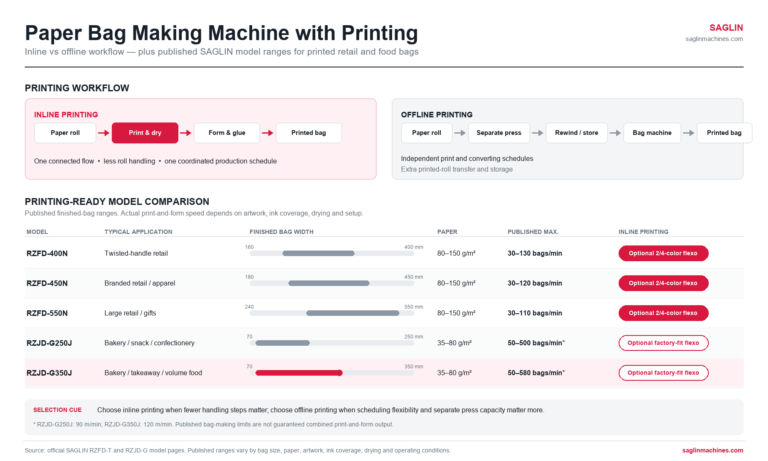
Inline window patching puts the patching unit on the folder gluer, so the window is applied as the carton runs through the gluing line. A standalone machine, which is what this guide covers, patches flat blanks as its own operation and hands them back to the stack. Inline suits one window format running for long stretches on a gluing line with spare hours, while a standalone machine suits a changing job mix, V-cut work, and plants where the folder gluer is already the bottleneck. The manufacturer comparison sets the two production models side by side.
How to choose a window patching machine: key criteria
Knowing how to choose a window patching machine comes down to specifications, not just the headline price. When you compare machines and quotes, these are the specs that decide whether the machine fits your production.
| Criterion | Why it matters | What to ask the supplier |
|---|---|---|
| Max running speed | Sets your throughput ceiling. Real output is always below the rated peak. | Rated speed and realistic speed for your carton size and film. |
| Sheet / carton size range | Min and max blank dimensions determine which jobs you can run. | Smallest and largest blank the machine handles. |
| Film compatibility | PET, PVC and BOPP behave differently in clarity, stiffness and cost. | Which films and thickness range (microns) are supported. |
| Registration accuracy | A misaligned patch ruins shelf appeal and creates waste. | Registration tolerance and whether photoelectric/servo control is used. |
| Glue system | Water-based cold glue runs clean and tacks fast; metering precision affects consistency. | Adhesive type and how glue volume is controlled. |
| Feeder type | Friction vs. vacuum feeding affects stability at high speed and with thin board. | Feeder design and maximum stable speed. |
| Window count | Multi-window jobs need multi-patch capability. | Max windows per carton it can patch in register. |
| Changeover time | Short runs lose money to long setups. | Typical job changeover time and tooling needed. |
| Service & spare parts | Downtime is the hidden cost over a machine’s life. | Warranty, installation, training and spare-parts lead time. |
What affects the price of a window patching machine?
There is no single list price, because the right machine depends on your volume, carton sizes and automation level. The main cost drivers are:
- Automation level — fully automatic lines cost more upfront but lower labour cost per carton.
- Speed and size capacity — higher rated speed and larger maximum blank size raise the price.
- Registration and control system — servo drives and photoelectric registration add cost but cut waste.
- Multi-window and window-cum-plain capability — extra functions add value and price.
- After-sales package — installation, operator training and spare-parts support.
Because B2B packaging machinery is configured to the buyer, the most reliable way to compare is to send your carton sizes, target output and film type, and request a tailored quotation rather than a catalogue price.
New vs used window patching machines for sale
Search for a window patching machine for sale and you will find two very different markets. New machines are built to your specification and delivered with warranty, training and certification paperwork. Used machines — mostly ex-European converters, listed through dealers and equipment marketplaces — are cheaper upfront and available immediately, which is why they tempt first-time buyers.
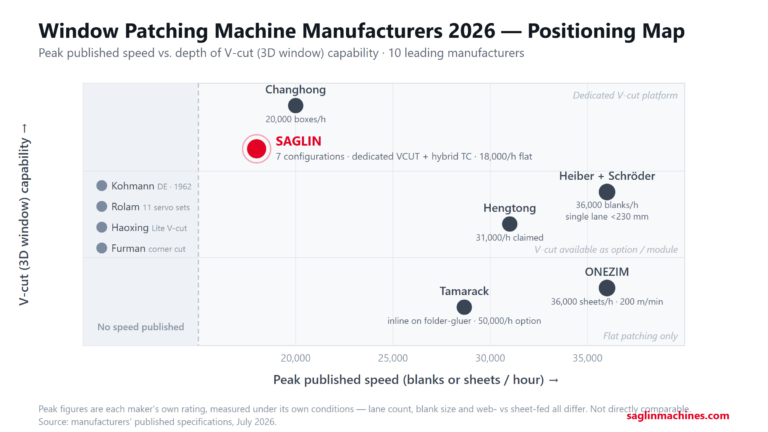
Before committing to a used machine, work through five checks. Window geometry: a flat-patching machine cannot be converted to V-cut, so a used flat machine permanently closes the premium-carton market to you. Blank sizes: confirm the existing tooling and format range actually cover your dominant carton sizes — retooling erodes the discount fast. Control system age: ask which PLC, drives and sensors are fitted and whether they are still supported; an obsolete control package can be unrepairable at any price. Wear points: film feed, patching head, suction and gluing system are where hours show. Paperwork: CE marking does not transfer cleanly between owners, and EAC declarations are issued against a supplier — a used import can leave you without either.
The rule of thumb: a used machine makes sense when it already matches your dominant blank size and you have in-house maintenance capability. Otherwise the parts risk and downtime consume the saving inside the first year, and a new mid-tier machine — configured to your cartons, with warranty, spares and training — is the lower total cost.
SAGLIN window patching machines
SAGLIN supplies window patching equipment under the SAGLIN‑VCUT, SAGLIN‑TC‑H and SAGLIN‑TC series, covering single- and double-window patching for folding cartons and rigid-style boxes. The range is built for stable high-speed feeding, accurate film registration and clean water-based gluing, and is supported with installation guidance, operator training and spare-parts supply for export customers.
See full specifications on the window patching machine page, or request a quote with your carton sizes and target output below.
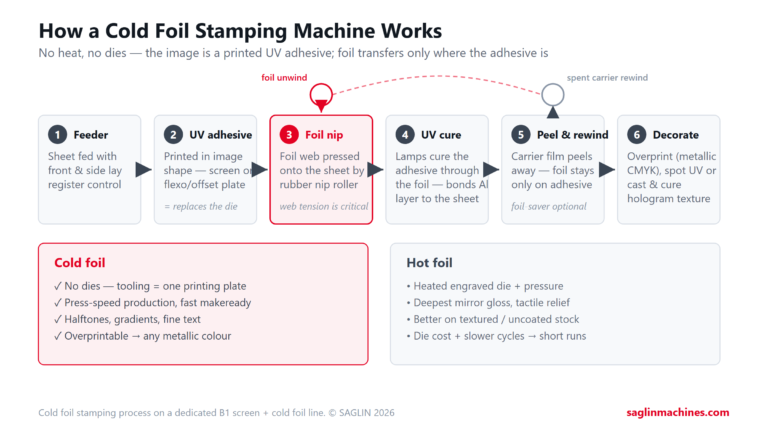
Window patching is one stage of print finishing. If you are also evaluating other post-press lines, see our laminating machines and cold foil stamping machines. If corrugated lamination is on your list, our flute laminating machine buyer’s guide explains how to choose the right model.
Frequently asked questions
What is the difference between window patching and lamination?
Window patching applies a clear film only over a die-cut window in a carton, so the product is visible. Lamination bonds film across the full surface of a printed sheet for protection and finish. Some machines can do both, which are called window-cum-plain machines.
Which film is best for window patching?
PET (polyester) is the most popular choice for its clarity, strength and stability. PVC and BOPP are lower-cost alternatives. The best film depends on your product, brand requirements and recyclability targets.
How fast can a window patching machine run?
It depends on automation level, carton size and film. Entry and mid-range machines suit moderate volumes, while high-speed automatic lines can patch several hundred cartons per minute. Always confirm the realistic speed for your specific job, not only the rated peak.
Can one machine patch more than one window per carton?
Yes. Multi-window machines can place and register two or more film patches on a single blank, which is needed for premium packaging with multiple openings. Confirm multi-window capability with the supplier if your designs require it.
How much does a window patching machine cost?
Price depends on automation level, speed, size capacity, control system and after-sales package, so machines are quoted to your specification rather than sold at a fixed catalogue price. Send your carton sizes, target output and film type to get an accurate quotation.
Get a window patching machine quote
Tell us your carton sizes, target output and film type — we’ll recommend the right SAGLIN model and send a tailored quotation.
Request a Quote