Window Patching Machine Manufacturers: 10 Compared (2026)
Shortlisting window patching machine manufacturers is harder than it should be. The German and American builders publish beautiful brochures with almost no numbers in them. The Chinese builders publish numbers that are not measured the same way. Put two quotations side by side and you are comparing a 36,000-blanks/hour figure taken on a 200 mm carton against an 18,000-sheets/hour figure taken on a full-format sheet. Nobody tells you that.
This guide fixes that. Below is a comparison table and a short profile of the ten window patching machine manufacturers that matter most in 2026, plus the one thing the category never explains: how to read a headline speed. Each profile ends with a plain verdict on who that brand actually suits.
Transparency note: this guide is published by SAGLIN, which builds its own window patching platform and appears in the list. Every claim about another manufacturer is taken from that manufacturer’s own published specifications, and we say clearly where a competitor is the stronger choice, including on speed, where we are not the leader.
First, how to read a headline speed
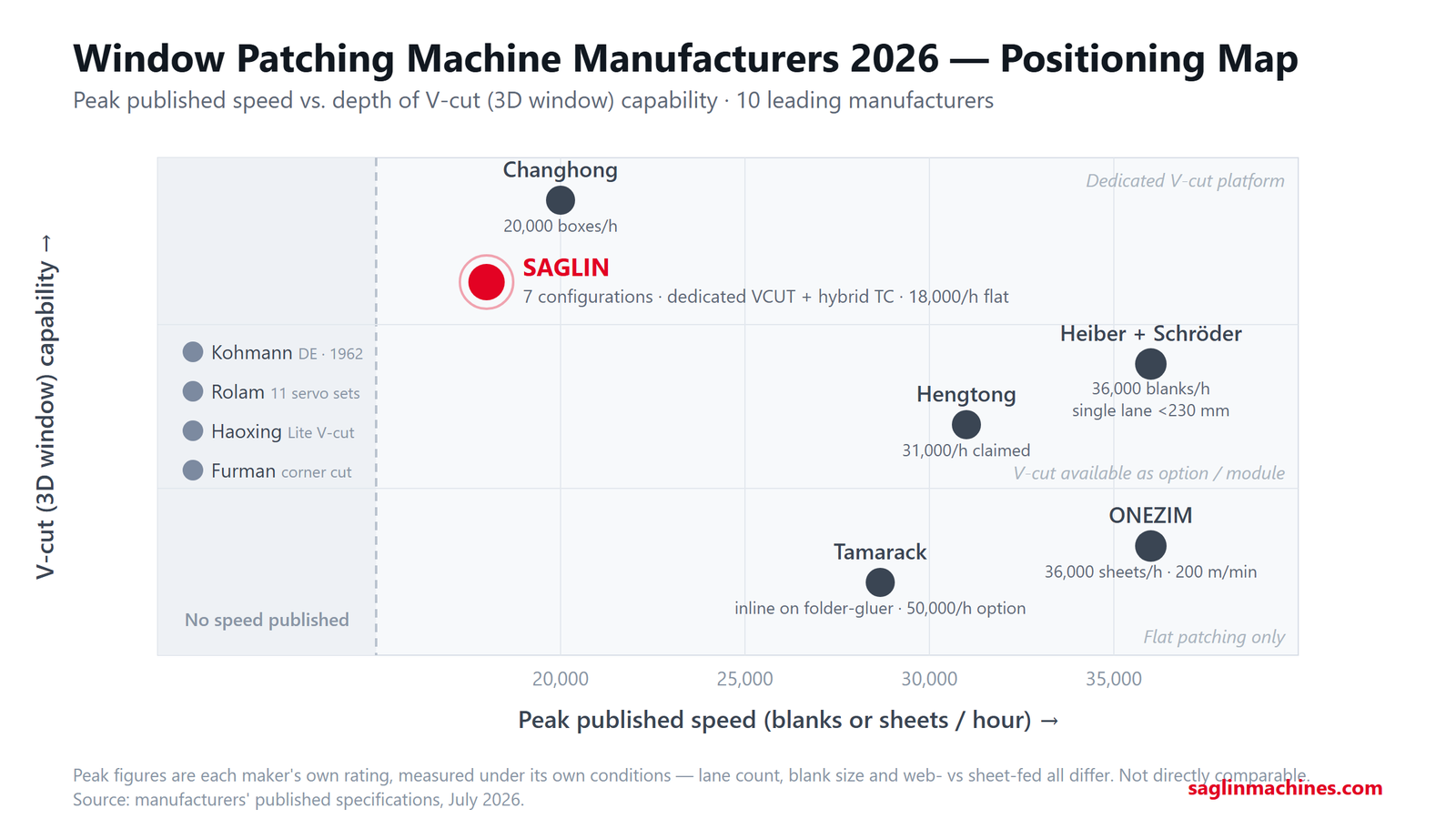
Every maker in this category quotes a peak. Almost none of them quote it under the same conditions, and the gap between the marketing number and your production number is routinely 40%.
- Lane count. A dual-lane machine running two small cartons side by side doubles its blank count without running any faster. Heiber + Schröder is explicit that its 36,000 blanks/hour applies to single-lane work on blanks below 230 mm. Shorter blanks mean more of them per metre.
- Blank size. Peak figures are quoted on the smallest format the machine accepts. Move to a 750 × 1050 mm cosmetic carton and throughput falls sharply on every machine here.
- Web-fed versus sheet-fed. Tamarack’s Vista mounts inline on a folder-gluer and runs at line speed, so its numbers sit in a different universe from a standalone sheet-fed patcher. It is not faster at the same job. It is doing the job inside another machine’s pass.
- Flat versus V-cut. V-cut folds the film into a 3D window, which is mechanically slower than flat patching by roughly half on every platform we examined. A vendor quoting one peak for a machine that does both is quoting the flat number.

Ask any of the window patching machine suppliers on your shortlist for a rated speed at your carton size, in your lane configuration, in writing. The ones who answer in a day are telling you something useful about after-sales too.
How we selected the top 10
We ranked the window patching machine manufacturers on four criteria that still matter three years after installation, and excluded trading companies that resell under their own badge without a factory behind them.
- Published, checkable specifications. Stated accuracy, format range and material range, not brochure adjectives.
- V-cut capability. Whether 3D window work runs on a dedicated platform, a bolt-on module, or not at all.
- Servo architecture. Independently driven axes versus clutch-and-cam transmission, which decides changeover time and long-run registration.
- Export reality. CE and EAC certification, overseas installs, spare-parts logistics and local commissioning.
Top 10 window patching machine manufacturers compared
| Manufacturer | Base | Platform focus | Peak published speed | V-cut | Best for |
|---|---|---|---|---|---|
| SAGLIN | China | 3 sub-series, 7 configurations: V-cut, high-speed flat, hybrid | 18,000 sheets/h flat · 7,000/h V-cut | Dedicated series | Premium 3D windows, CIS/EAC markets |
| Kohmann | Mettmann, Germany (1962) | 6 models, F-1000 to F-1440 Servo | Not published | Yes, module | Long-life German build, wide blanks |
| Heiber + Schröder | Erkrath, Germany (1986) | WP SMART · WP PRO · WP MASTER | 36,000 blanks/h (single lane, <230 mm) | Yes, module | Very high-volume European converters |
| Tamarack Products | Wauconda, IL, USA (1969) | Vista inline system, retrofits folder-gluers | 500 FPM ≈ 20,000–30,000 cartons/h | No | Windowing inside an existing gluer pass |
| ONEZIM (Fengchi) | Dongguan, China (2009) | Full-servo Y series, BTM-950Y | 36,000 sheets/h (200 m/min) | Limited | Flat-patching volume at 24/7 duty |
| Changhong | Dongguan, China (2000) | TC and CH series, single and dual lane | 20,000 boxes/h single lane | Yes, CH series | Window patching plus flute lamination |
| Hengtong | Wenzhou, China | 13+ ZKT models incl. ZKT-1800 full servo | 31,000 sheets/h (claimed) | Yes | Widest model ladder, budget to servo |
| Rolam | Wenzhou, China (2006) | XY-90/1100-S, TC-90/1200, TC-700/1080 | Not published | Yes | Servo-count-led specification buyers |
| Haoxing | Ruian, China | TC-650/TC-1080 plus A and Lite variants | Not published | Yes, Lite series | Entry budgets, corrugated windows |
| Furman | Dongguan, China | 750T/1050T corner-cutting patcher | Not published | Yes | Corner cutting and creasing in one pass |
Speeds are each maker’s own peak rating for its fastest model, measured under its own conditions. See the section above before comparing them directly. “Not published” means the manufacturer states no figure on its public pages. Ask for one in writing.
The ten window patching machine manufacturers are profiled below in the same order, each with the specifications that maker publishes and a verdict on the buyer it genuinely suits.
1. SAGLIN
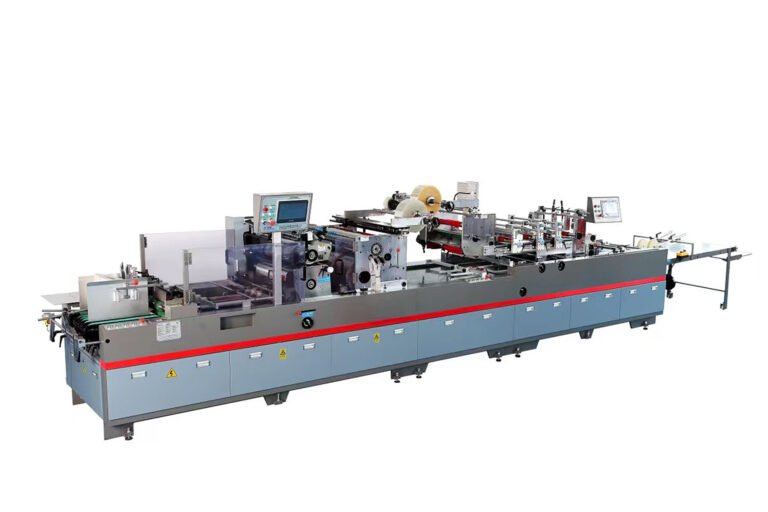
SAGLIN’s window patching platform is organised around a deliberate split: three sub-series across seven configurations, because flat patching and V-cut are structurally different jobs and most of this market pretends they are one.
The VCUT series is a dedicated V-cut window patching machine. Three independent servo motors drive film feed, V-cut die and creasing wheel, holding ±0.5 mm positioning on cartons to 750 × 1050 mm. An optional heater roller extends film handling to 0.40 mm for heavy BOPP and PET.
The TC-H series handles pure flat volume at 18,000 sheets/hour on the TC800H and TC1050H. The wide-format TC1450H covers 1250 × 1450 mm sheets at 16,000/h. Material range across the series is 250–1500 gsm up to 6 mm board.
The TC hybrid series puts both processes on one platform: six independent servo units, one feeder, one gluing station. That costs roughly 40% less in capital than buying a dedicated machine for each job.
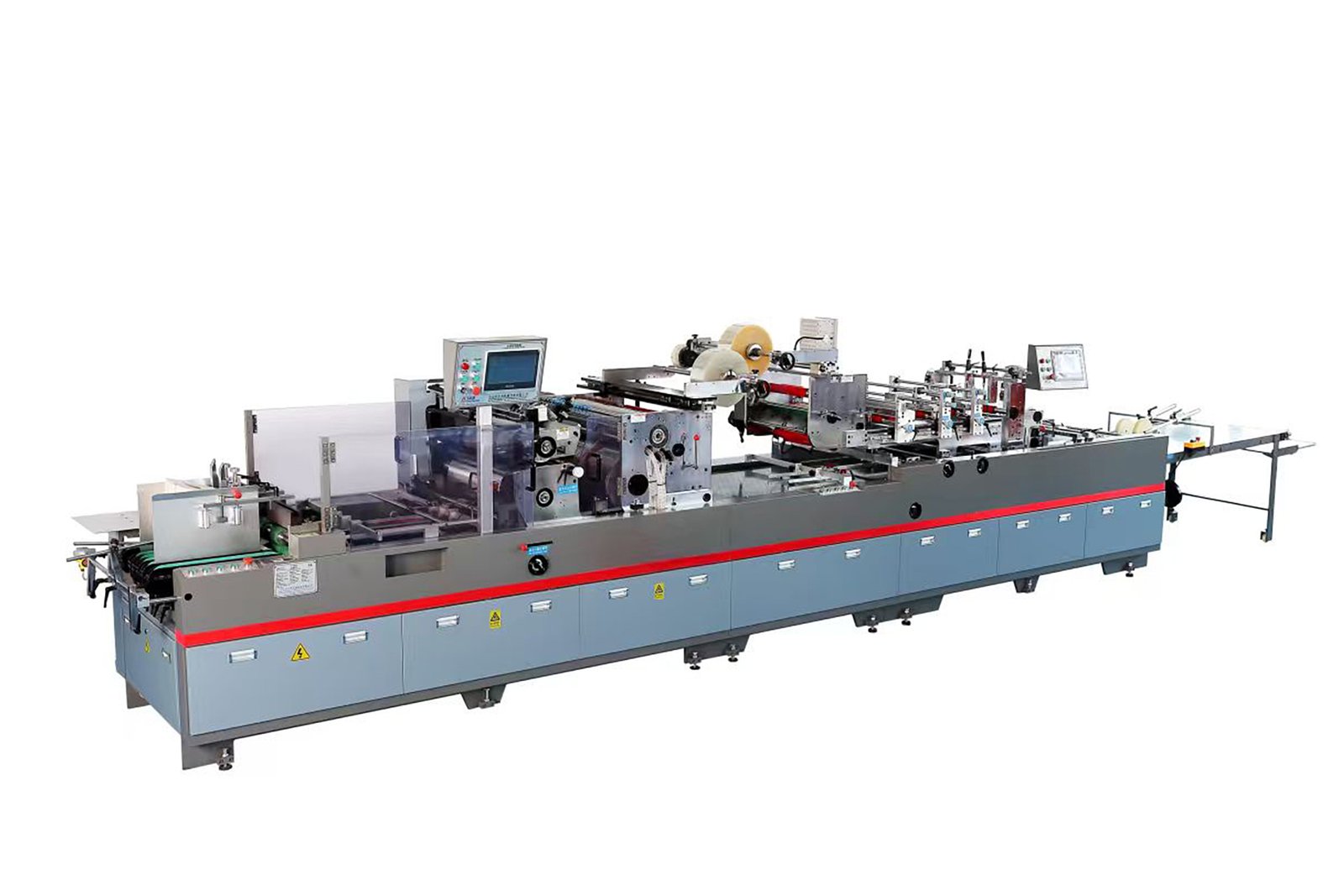
Components are Mitsubishi, Schneider, SICK, Panasonic, Festo and Omron. Machines carry CE and ship EAC-ready at 380V/50Hz, with installation and operator training in the Moscow region handled by SAGLIN’s partner HD RUS LLC. On raw flat speed, SAGLIN sits mid-table here and we would rather say so than dress up the number.
Best for: converters whose margin comes from 3D window cartons, in cosmetic, fragrance and luxury gift work, and exporters to Russia and the CIS, where EAC paperwork and Russian-language operator panels are standard rather than a special order.
2. Kohmann
Founded in 1962 in Mettmann, Kohmann is the reference name in European carton windowing and describes itself as one of the world’s leading manufacturers of carton converting machinery. The range runs from the F-1000 Classic through the F-1100 ECO and Universal to the servo-driven F-1120 and F-1440. The F-1440 Servo takes blanks up to 1440 mm in single-lane operation and 705 mm per lane in two-lane mode, with all cylinders directly servo-driven.
Kohmann publishes no throughput figures at all, which is consistent across the German builders in this category and frustrating if you are building a business case. Machines hold their value unusually well on the used market. That says something about build life, and also about the price of a new one.
Best for: European converters with long-horizon capital planning and wide-blank work, who will accept a premium price and a quiet spec sheet in exchange for a twenty-year machine.
3. Heiber + Schröder
Erkrath-based Heiber + Schröder has built window patchers and carton erectors since 1986 and currently fields three: WP SMART, WP PRO and WP MASTER. The WP SMART is rated up to 36,000 blanks per hour in single-lane operation on blanks below 230 mm, handling 80–800 mm lengths and 80–600 mm widths, in 220–600 gsm board and corrugated to 5 mm. The older WP SPEEDLINER now appears mainly on the second-hand market rather than in the current catalogue.
Best for: high-volume European plants running small-to-medium blanks where the top-end blank count genuinely translates into shipped cartons.
4. Tamarack Products
Tamarack, in Wauconda, Illinois, has made specialised packaging, label and business-form equipment since 1969. Its Vista system solves the problem differently from everyone else here: instead of a standalone patcher, it installs onto a new or existing folder-gluer, so windowing and gluing happen in a single pass.
The line is rated up to 500 FPM, typically 20,000 to 30,000 cartons per hour, with a high-speed option reaching 50,000 on some jobs. It handles liners, susceptor patches and rigid windows up to 14 inches wide as standard, 18 inches on extended systems. Setup is quoted at 30 minutes or less.
Best for: North American converters who already own the folder-gluer and want windowing capacity without adding a machine, a floor footprint and a second operator.
5. ONEZIM (Fengchi)
ONEZIM is the international arm of Guangdong Fengchi, founded in 2009, operating from a 50,000 m² plant with more than 2,600 machines installed across 60-plus countries and around 30 patents. Its full-servo Y series, with the BTM-950Y as the current showpiece, is rated to 36,000 sheets/hour at 200 m/min. Continuous running is quoted at 32,000/h, holding ±1.0 mm flat-patching accuracy and ±0.5 mm registration. Standard models cover windows up to 1400 × 1400 mm.
This is the strongest pure flat-patching specification in the group and it is published openly, which is rare. V-cut is not where this platform is aimed.
Best for: tissue box and folding-carton plants running flat windows at 24/7 duty, where blank count per shift is the whole business case.
6. Changhong
Dongguan Changhong has focused on window patching since 2000. The TC-650/1100 single-lane patcher runs to 20,000 boxes/hour with windows to 380 × 500 mm. The TC-1100H is a servo-driven dual-lane machine quoted at 10,000 pcs/hour across both lanes. The CH-650/1000 adds a punching and scoring unit with V-cutting and creasing.
Changhong also builds flute laminators, which makes it one of the few window patcher manufacturers that can quote two processes on one purchase order.
Best for: carton plants sourcing windowing and flute lamination together and wanting a single commissioning visit.
7. Hengtong
Based in Pingyang, Wenzhou, Hengtong claims more than 30 years in machine building and over 20 years specifically in window patching, and fields the longest model ladder in this guide: 13-plus ZKT variants from the compact ZF-380 up to the ZKT-1800 full-servo intelligent machine, including rotary-knife and horizontal-knife configurations. Peak efficiency is claimed at 31,000 sheets/hour, though the published pages do not state the format that figure was measured on.
Best for: buyers who want to start on a mechanical automatic window patching machine and step up to full servo later without changing supplier.
8. Rolam
Zhejiang Rolam Intelligent Technology, established in 2006 and also in Pingyang, sells on servo architecture rather than speed. The XY-90/1100-S carries 11 servo sets and the TC-90/1200 nine, both with photoelectric monitoring, alongside the more conventional high-speed TC-700/1080 for card and corrugated stock. No throughput figures are published.
Best for: technically-led buyers who read servo count and sensor coverage as the real proxy for changeover speed and registration stability.
9. Haoxing
Haoxing, in Ruian, works the entry and mid segments with the TC-650 and TC-1080 covering sheets from 150 × 160 mm up to 650 × 1080 mm, plus A-variants adding punching and creasing and a Lite series that includes a V-cut model and a corner-box configuration for tissue work. Corrugated handling is a stated strength on the 1080 models.
Best for: smaller converters and first machines, particularly where corrugated windows rather than premium cartonboard are the daily work.
10. Furman
Dongguan Furman Machinery rounds out the list with its 750T/1050T series, a fully automatic corner-cutting and creasing patcher that also runs simple flat patching. Published specification depth is thinner than the leaders’, so request a full technical sheet and a component brand list before you put it against a quoted rival.
Best for: price-led tenders for corner-cut carton work where the specification is already fixed and the decision is commercial.
Inline window patching vs a standalone machine
Inline window patching means the patching unit sits on a folder gluer and applies the film while the carton runs through, instead of on a machine of its own. Among the ten window patching machine manufacturers above, Tamarack Products is the one whose flagship is an inline unit. The Vista mounts on an existing folder gluer and runs at about 500 feet per minute, which works out to roughly 20,000 to 30,000 cartons per hour, with a high speed version rated at 50,000. The rest of the list, SAGLIN included, builds the offline alternative, a standalone patcher that takes flat blanks and returns patched blanks to the stack.
An inline window patching system earns its place when one window format runs for long stretches and the folder gluer has hours to spare. The blank is handled once instead of twice, which removes a stacking and re-feeding cycle along with the labour attached to it. What you give up is scheduling freedom, because the patching unit is now tied to that folder gluer and every window job competes with the gluing plan.
A standalone machine wins when the job mix changes often, when V-cut and 3D windows are in the order book, or when the folder gluer is already your bottleneck. It runs on its own schedule, it can patch while the folder gluer is doing something else, and V-cut exists as a dedicated platform rather than a module bolted onto a gluing line. That is the route SAGLIN builds for, with the TC and TC-H flat platforms and a separate V-cut platform.
Comparing inline window patching equipment against the machines profiled above is therefore a comparison of two production models, not two brands. Put the same three questions to both routes: rated output at your real blank size, changeover time between two live jobs, and who services the machine in your country. The answers separate the two options far more sharply than any headline speed does.
How to choose between them
The window patching machine manufacturers above differ far more than their brochures suggest, and three questions cut the list down in about ten minutes.
- Do you sell 3D windows or flat windows? If your order book is tissue box, food and standard retail cartons, buy flat speed and ignore V-cut entirely: ONEZIM, Heiber + Schröder and the TC-H class are your shortlist. If cosmetic, fragrance and gift work is where your margin lives, you need a genuine V-cut window patching machine, and the field narrows to a handful of makers with a dedicated platform rather than an add-on module.
- What is your widest carton, really? Format ceiling eliminates more candidates than speed does. A 1250 × 1450 mm requirement removes most of this list immediately. A 650 mm ceiling opens up the entry tier and saves you a great deal of money.
- Who commissions it, and where? For CIS and EAC-zone installations, verify EAC certification and a Russian-language HMI from the factory, plus a named local partner for installation. For the EU, confirm CE is issued for your machine configuration and not quoted from a catalogue.

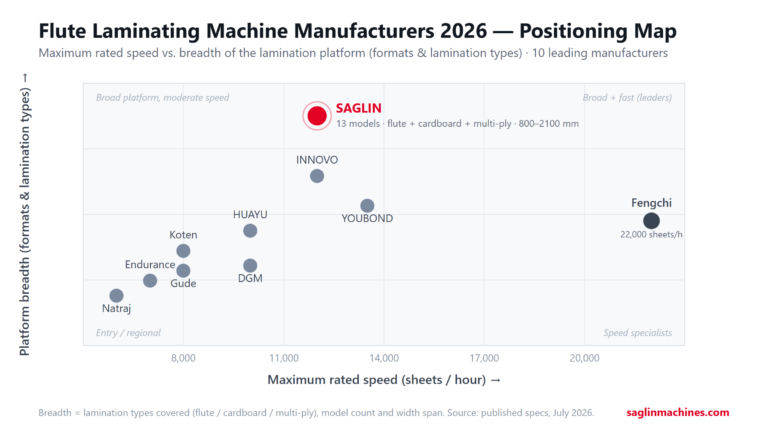
If you are new to the category, our window patching machine buyer’s guide walks through film types, glue systems and format planning before you start collecting quotations. Buyers evaluating lamination at the same time may also want our comparison of flute laminating machine manufacturers.
Frequently asked questions
Who are the leading window patching machine manufacturers in 2026?
The category splits three ways. Kohmann and Heiber + Schröder lead the German premium tier on build life and blank-count throughput. Tamarack leads the North American inline segment with equipment that mounts onto an existing folder-gluer. ONEZIM, SAGLIN, Changhong, Hengtong, Rolam, Haoxing and Furman lead the Chinese tier on price-to-specification, with SAGLIN and Changhong the strongest on V-cut 3D window work. There is no single best maker, only a best fit for your carton mix.
What is the difference between flat patching and V-cut window patching?
Flat patching applies a single flat film across a die-cut opening, producing a 2D window. V-cut cuts and folds the film so it wraps into the carton, producing a folded 3D window with visible depth. That is the format global cosmetic and fragrance brands specify almost exclusively. V-cut runs roughly half the speed of flat patching on the same platform and demands tighter registration, typically ±0.5 mm against ±1 mm for flat work.
Which window patching machine is best for tissue boxes?
Tissue box work is flat-window, high-volume and price-sensitive, so throughput and slitting or die-cutting modules matter more than V-cut. Look for machines rated at 18,000 sheets/hour or above on your actual sheet size, factory-fit tissue box slitting, and a continuous rather than intermittent feeding system, because intermittent designs wear faster at tissue box duty cycles. Corner-box capability is worth specifying if you run that format.
How much does a window patching machine cost?
Configuration sets the price, not the model name. An entry automatic patcher, a wide-format servo machine, a dedicated V-cut platform and a German-built patcher sit in clearly separate tiers, and the film handling, punching and embossing options you add can move a quotation by 30% or more. Compare quotations at identical option lists, and ask for the landed figure rather than the FOB line.
Are Chinese window patching machines as good as German ones?
They are no longer comparable on price and increasingly comparable on specification: the leading Chinese builders now publish servo counts, registration tolerances and material ranges that stand up against European machines, and several exceed them on published speed. The genuine German advantages are mechanical longevity, resale value and decades of accumulated paperboard handling experience. Judge each machine on published accuracy, component brands and verifiable installations in your region rather than on country of origin.
Talk to SAGLIN
Send us your carton sizes, board grades, film thickness and monthly volume, and our engineers will tell you which machine class fits, including when it is not ours. Unlike most window patching machine manufacturers, we will put a rated speed at your format in writing before you commit to anything, and trials on your own substrates can be arranged at the factory.
Related reading: Window Patching Machine: Buyer’s Guide · SAGLIN-VCUT Series: V-cut 3D Window Patching · Top 10 Flute Laminating Machine Manufacturers